 Save to Pinterest
 There's something about the smell of leeks hitting hot butter that stops me mid-thought every time. Years ago, a neighbor invited me over on a particularly gray afternoon and served this soup—nothing fancy, just bowls of pale gold comfort that made the whole day feel warmer. I went home determined to figure out how she'd made it taste like both simplicity and care at once, and that's when I discovered the real magic: slow cooking leeks until they lose their sharpness and become almost sweet.
I made this for my sister during her first week in a new apartment with only a hot plate and one pot to her name. She ate it straight from the cooking vessel, standing in her kitchen surrounded by unpacked boxes, and it became the first real meal of her new chapter. Every time she makes it now, she texts me a photo.
Ingredients
- Leeks (3 medium, white and light green parts only): These are your star—sliced leeks release a gentle sweetness as they cook that's completely different from raw onion, so don't skip the cleaning step or you'll bite into grit and regret everything.
- Unsalted butter (2 tablespoons): This is your foundation for flavor, melting into the leeks and creating that golden, savory base that makes people lean in with their spoons.
- Yellow onion (1 medium, diced): A supporting character that adds depth without announcing itself—you won't taste distinct onion, just a rounder, more satisfying flavor.
- Yukon Gold potatoes (3 medium, peeled and diced): These waxy potatoes break down into creamy flecks rather than turning to starch, creating the soup's texture without needing cream as a crutch.
- Garlic (2 cloves, minced): Just enough to whisper in the background—garlic burned at this stage tastes bitter, so you'll add it after the leeks soften.
- Vegetable broth (4 cups): Low-sodium lets the vegetables shine and gives you room to season properly without ending up with something salty and one-dimensional.
- Whole milk or heavy cream (1 cup): Use what you have on hand; cream makes it richer and more velvety, while milk keeps it lighter and still deeply satisfying.
- Bay leaf (1): This quiet addition brings a subtle earthiness that rounds out the whole dish—remove it before blending or it becomes a choking hazard.
- Salt and black pepper: Taste constantly as you season; the potatoes absorb salt as they cook, so don't fully commit to seasoning until the end.
- Ground nutmeg (1/4 teaspoon, optional): A whisper of nutmeg awakens the soup's sweetness, but use a light hand or you'll overshadow everything else.
- Fresh chives or parsley (2 tablespoons, chopped): The brightness here is essential—it cuts through the richness and makes each spoonful feel fresh rather than heavy.
Tired of Takeout? 🥡
Get 10 meals you can make faster than delivery arrives. Seriously.
One email. No spam. Unsubscribe anytime.
Instructions
- Clean your leeks like you mean it:
- Slice them lengthwise, then into thin half-moons and place them in a bowl of cold water, agitating gently so any hidden grit falls to the bottom. Leeks trap sand in their layers, and biting into even a little bit ruins the whole eating experience.
- Build your flavor foundation:
- Melt butter over medium heat and add the leeks and onion together, stirring occasionally for about seven minutes until they're completely soft but haven't taken on any color. This slow cooking transforms the leeks' sharp bite into something almost buttery and sweet on its own.
- Wake it up with garlic:
- Add your minced garlic and let it cook for exactly one minute—you want that fragrant moment without bitterness creeping in. The whole pot will smell incredible and you'll know it's time for the next step.
- Build the body of your soup:
- Stir in your diced potatoes, add the bay leaf, and pour in all four cups of broth at once, which will cause a pleasant sizzle. Bring it to a boil, then immediately drop the heat and let it simmer covered for twenty to twenty-five minutes until the potatoes are fork-tender and falling apart slightly at the edges.
- Transform it into velvet:
- Fish out the bay leaf first, then use an immersion blender to work through the soup until it's completely smooth and creamy—or if you prefer, work in batches with a regular blender, which gives you more control and a slightly silkier texture. The potatoes do most of the heavy lifting here; there's enough starch that you don't need much cream.
- Finish with care:
- Pour in your milk or cream slowly while stirring, heating it gently so everything stays silky and doesn't break. Once it's warm all the way through, taste it seriously and season with salt, pepper, and that optional pinch of nutmeg, adjusting until it tastes exactly right to you.
- Serve it with intention:
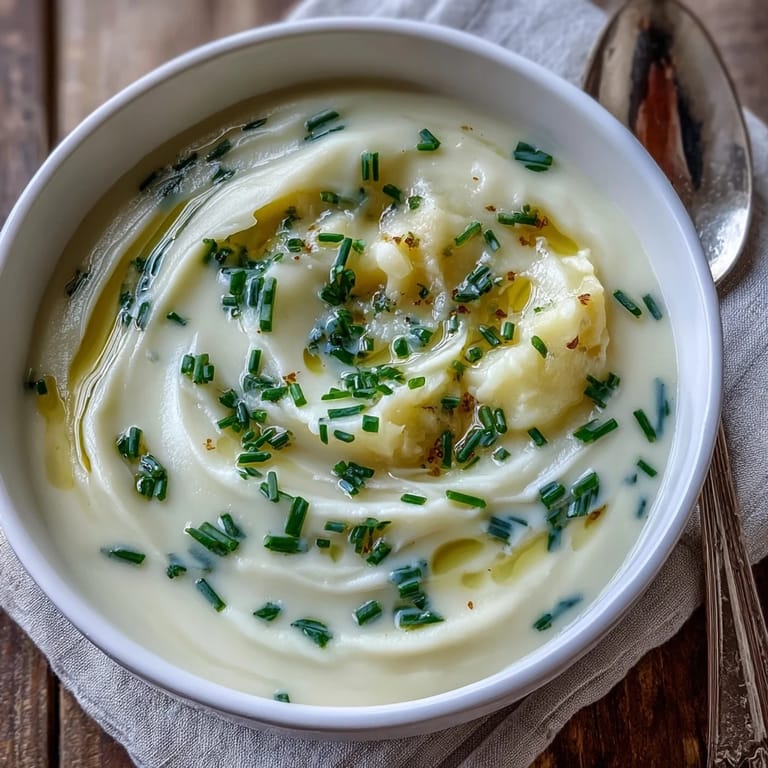
- Ladle into bowls and scatter chives or parsley over the top, maybe add a small swirl of cream or olive oil if you're feeling generous. Serve immediately while it's hot and the garnish hasn't wilted into invisibility.
 Save to Pinterest
 One winter evening, a friend brought this soup to my door the day after I'd moved into a new place, and it felt less like a gesture and more like witnessing someone understand what I needed without being asked. That's when food stopped being just about hunger and became about how you show up for people.
The Leek Selection Secret
Not all leeks are created equal, and I learned this by accidentally grabbing tough, enormous ones at the farmers market that refused to soften no matter how long I cooked them. Now I look for leeks that are about an inch thick at the white part—anything thicker tends to have a woody center that doesn't ever fully become creamy. The smaller ones cook faster too, which means you're not standing over the stove waiting for them to surrender.
Why This Works for Crowds
This soup scales beautifully and looks far more impressive than the effort it demands, which makes it perfect for dinner parties where you want to seem like you've fussed but actually haven't. You can make it the day before and reheat it gently, and it actually tastes better as the flavors settle and become more integrated. I've served it to vegetarians, carnivores, and skeptics of soup altogether, and everyone's asked for the recipe.
Variations That Still Feel Like Home
Once you've made the basic version a few times, the soup becomes a canvas for small experiments. A splash of dry white wine added after sautéing the leeks brings a subtle sophistication that makes people pause mid-spoonful trying to identify what's different. Crispy bacon bits scattered on top convert it from vegetarian comfort food to something heartier, while a swirl of truffle oil or a sprinkle of good Gruyère transforms it into something elegant enough for a proper dinner party.
- For vegan versions, use olive oil instead of butter and coconut or oat milk in place of cream—the soup loses nothing in the swap.
- Save your potato scraps in the freezer and add them to the broth next time for even more potato flavor without thinking about it.
- Fresh thyme stirred in at the very end adds an herbaceous note that feels like a professional chef move.
 Save to Pinterest
 This soup has a way of becoming part of your regular rotation without you quite planning for it to, and there's something grounding about having a recipe that's this reliable and kind. Make it once, and you'll find yourself making it again whenever you need something that feels like everything's going to be okay.
Ask About This Recipe
- → How do I clean leeks properly?
Slice leeks lengthwise and cut into half-moons. Place in a bowl of cold water, swish gently, and let sit for 5 minutes. The grit will settle to the bottom. Lift leeks out carefully, leaving the dirt behind.
- → Can I make this ahead of time?
Yes, this soup actually improves in flavor when made a day ahead. Store in the refrigerator for up to 3 days. Reheat gently over low heat, adding a splash of broth or cream if it has thickened too much.
- → What potatoes work best for creamy texture?
Yukon Gold potatoes are ideal for their naturally creamy texture and buttery flavor. Russets also work well and break down more easily. Avoid waxy potatoes like red or new potatoes, as they won't soften as readily.
- → Is it better to blend with an immersion blender or regular blender?
An immersion blender offers convenience and allows you to control the texture right in the pot. A regular blender produces an ultra-smooth result but requires careful handling of hot liquid and blending in batches.
- → How can I make this dairy-free?
Replace butter with olive oil for sautéing. Use coconut milk, almond milk, or oat milk instead of dairy cream. The texture may be slightly lighter but still delicious. Adding a cooked potato can help restore creaminess.
- → What can I use for garnish?
Fresh chives, parsley, or thives add color and freshness. A swirl of cream creates an elegant presentation. Crispy bacon bits, toasted croutons, or a drizzle of high-quality olive oil also work beautifully.