 Save to Pinterest
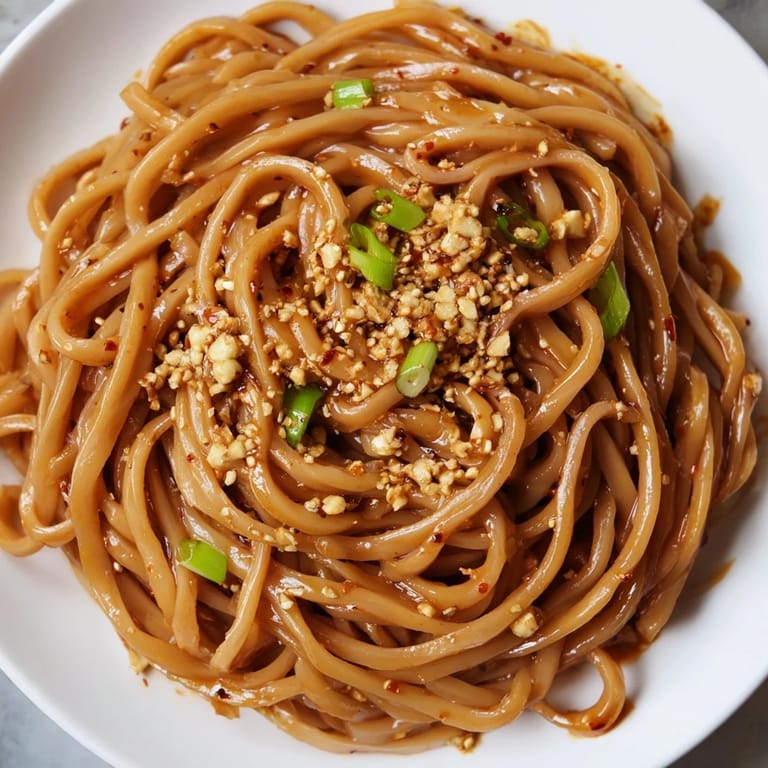
 There's a moment every home cook discovers when they stop following recipes like instruction manuals and start improvising from what's already in the kitchen. Mine happened on a Tuesday night when I had exactly two things: a craving for something bold and a bottle of chili flakes that had been sitting in my pantry too long. What started as throwing together noodles and leftover aromatics became this garlic chili oil situation that completely rewired how I think about quick meals. The key isn't fancy technique—it's understanding that hot oil carries flavor in a way nothing else can, and that moment when you pour it over garlic and feel the kitchen fill with smoke and spice? That's when you know you've made something worth repeating.
I made this for a friend who'd just moved into a tiny apartment with barely any kitchen equipment, and watching her face when she tasted it—when that first wave of garlic and heat hit—made me realize that sometimes the simplest dishes have the most impact. She asked for the recipe that night, then texted me two days later saying she'd already made it three times. It became our quick meal text: 'Chili oil noodles tonight?'
Ingredients
- 200g wheat noodles: Chinese wheat noodles are chewier and sturdier than most dried pastas, which means they stand up to the bold oil without getting mushy, but linguine works in a pinch if that's what you have.
- 4 cloves garlic, finely minced: This is the stage where your knife skills matter—mincing fine means the garlic gets distributed evenly and toasts beautifully when the oil hits it.
- 2 scallions, thinly sliced: Keep the white and green parts separate so you can use the whites for the infused oil and save the greens as fresh, bright garnish.
- 1 tablespoon toasted sesame seeds: Toasted versions have infinitely more flavor than raw, and they add a subtle crunch that balances the oil.
- 2½ tablespoons chili flakes: Sichuan or Korean varieties bring different heat profiles—Sichuan gives you that tingling numbing sensation, Korean is cleaner and sharper, so pick based on your mood.
- ½ teaspoon Sichuan peppercorns: Optional but worth tracking down because they create a distinctive numbing sensation that makes the heat feel sophisticated instead of just hot.
- ¼ teaspoon ground white pepper: It sounds like a small amount, but white pepper brings a different kind of bite than black pepper would.
- ½ teaspoon sugar and salt: These balance the chili and enhance every other flavor—don't skip them even though they seem minimal.
- 3 tablespoons neutral oil: The vehicle for everything, and the temperature matters more than the type, so pay attention to when it shimmers.
- 1½ tablespoons light soy sauce and 1 tablespoon black vinegar: These create the actual sauce, with the vinegar cutting through the richness so every bite stays bright.
- ½ teaspoon toasted sesame oil: Added at the end so the heat doesn't damage its delicate nutty flavor.
Tired of Takeout? 🥡
Get 10 meals you can make faster than delivery arrives. Seriously.
One email. No spam. Unsubscribe anytime.
Instructions
- Boil the noodles until they're just tender:
- Follow the package timing but taste one at two minutes before the end to catch them at chewy instead of soft. Reserve that cooking water—it's starchy and will help the sauce coat everything evenly.
- Gather your chili-garlic mixture in a heatproof bowl:
- Having everything sitting in one bowl before the oil goes in is essential because the magic happens fast and you won't have time to think once that hot oil makes contact.
- Heat the oil until it shimmers and moves fast across the pan:
- You're looking for that moment right before smoke, where the oil looks almost alive. This takes maybe two minutes on medium-high heat.
- Pour the hot oil over the garlic and chili slowly while stirring:
- The sizzle is part of the cooking—it's toasting the garlic and blooming the chili all at once. Your kitchen will smell incredible.
- Build the sauce in a large bowl and toss everything together:
- The noodle water you reserved becomes part of the sauce, loosening it enough that every strand gets coated. Toss aggressively—this isn't the time to be gentle.
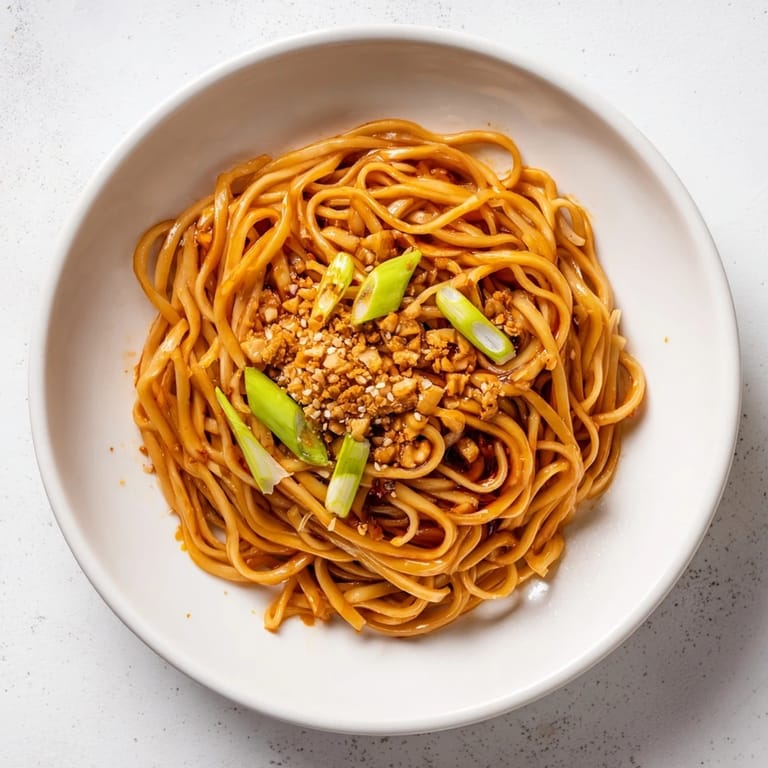
- Finish with fresh scallion greens and extra sesame seeds:
- These add contrast to all that heat and richness, so don't skip them even if you're eating alone.
 Save to Pinterest
 The best meals are the ones you come back to not because they're complicated but because they make you feel satisfied in a way that sticks with you. This dish does that—it's become my favorite thing to make when I want to prove to myself that bold cooking doesn't require hours of work, just presence and good instincts.
The Art of Blooming Aromatics
Before I understood this dish, I used to throw all my ingredients into room-temperature oil and wonder why it tasted flat. The hot oil technique does two things at once: it toasts the garlic so it becomes sweet instead of raw, and it wakes up the chili flakes so every one of them releases its heat and flavor. It's the same principle that makes tempering spices work in so many cuisines—heat isn't just about cooking, it's about transformation. Once you see how much difference a few seconds and the right temperature make, you start applying it everywhere.
Customizing Your Heat Level
Heat tolerance is personal, and this recipe respects that because you can adjust it without ruining anything. Start with the full amount if you like intense spice, use half if you're cautious, or skip it entirely if you want the dish to be about the garlic and sesame instead. I've made it both ways—once for someone who can barely handle black pepper, and once for a friend who thinks the current amount is still too mild. The beauty is that the sauce tastes good either way because it's built on real flavor, not just heat.
Making It a Meal
On its own, this is a solid snack or light dinner, but it's also a brilliant base for anything you want to add. Some nights I sauté some bok choy or snap peas in a separate pan for three minutes and toss them in, other times I've crumbled some crispy tofu or added shredded rotisserie chicken. The best version I've made included stir-fried mushrooms because their earthiness balanced the aggressive heat perfectly.
- Proteins like tofu, chicken, or shrimp all work if you cook them first and add them after tossing.
- Vegetables should be either raw and crisp or cooked hot and fast—nothing worse than mushy additions in a spicy noodle dish.
- If you're feeding more than two people, double everything but cook the noodles in two batches so they don't clump.
 Save to Pinterest
 This is the kind of recipe that teaches you something every time you make it, whether that's about timing or taste or just about how satisfying simple food can be when every element matters. Make it tonight.