 Save to Pinterest
 There's something about the smell of harissa hitting hot oil that stops me mid-conversation. I discovered this pasta on a quiet Tuesday night when I had chickpeas, a jar of harissa I'd been nervously eyeing, and the sudden urge to make something that felt alive on the plate. Twenty minutes later, I was stirring this golden-red sauce that tasted like it had traveled further than my kitchen. It's become the dish I make when I want dinner to feel intentional without spending hours cooking.
I made this for my friend Marcus on a Thursday when he'd had one of those weeks where nothing goes right. He came over skeptical about chickpeas in pasta, but that first forkful—when the lemon and spice hit at the same time—his whole face changed. He asked for the recipe before he'd even finished eating, and now he texts me photos of his versions with roasted vegetables added. That's when I knew this wasn't just dinner.
Ingredients
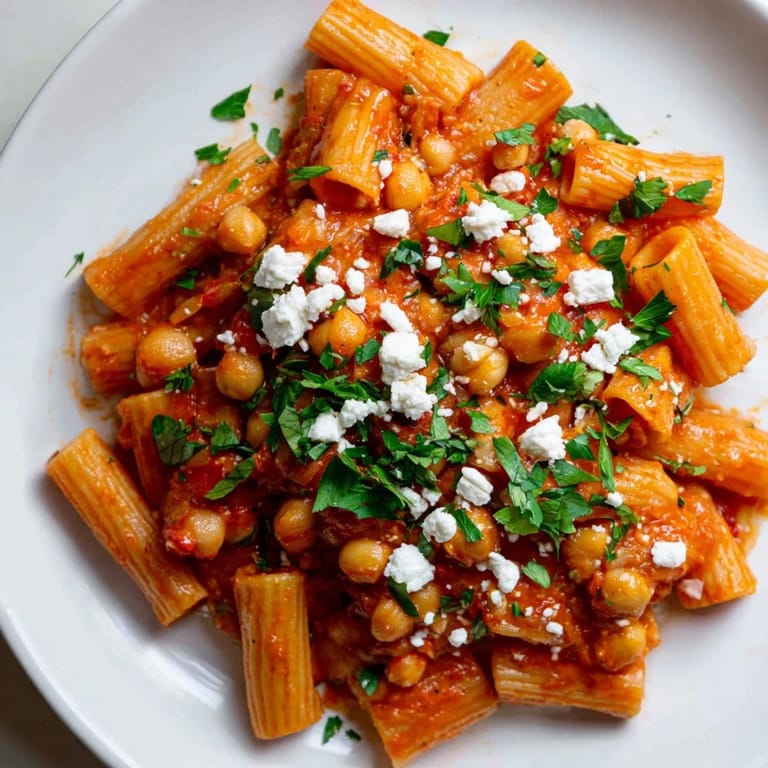
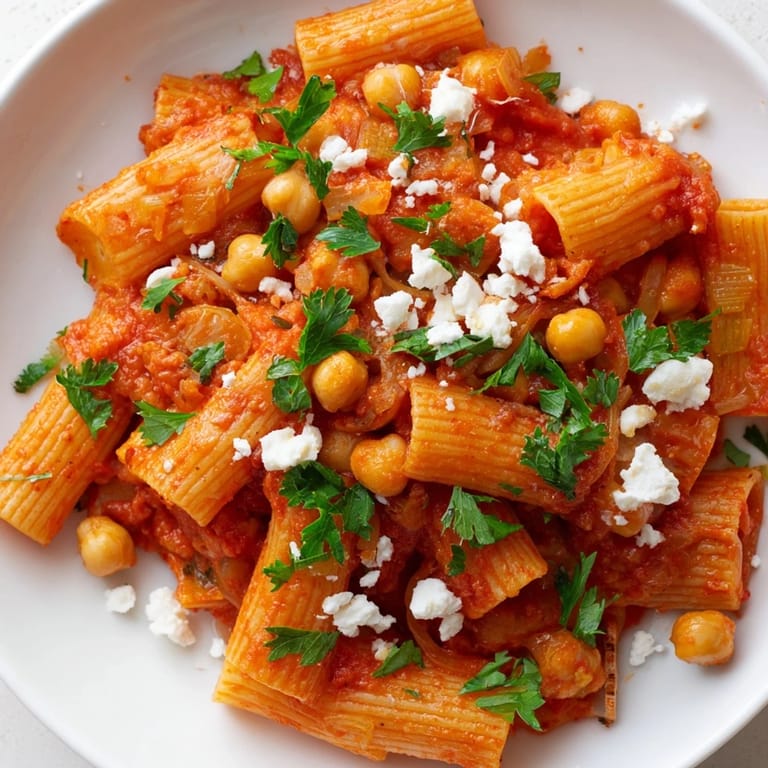
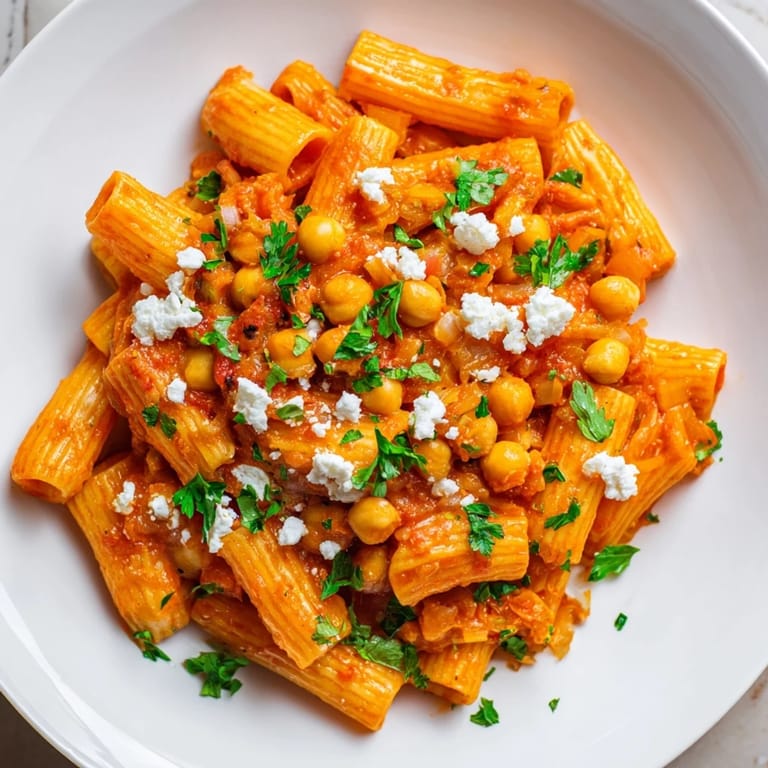
- Dried short pasta (350g): Penne or rigatoni cups the sauce better than longer shapes, holding onto those spicy bits in every bite. I've learned to reserve pasta water without thinking now—it's your secret for silky sauce at the end.
- Olive oil (2 tbsp): This is where the harissa makes its first impression, so use the good stuff you actually like tasting.
- Medium onion: Chopped small enough that it melts into the sauce but stays present enough to remind you of home cooking.
- Garlic cloves (3): Minced fine because we're building layers, not announcing garlic's arrival.
- Harissa paste (2 tbsp): This is the heart of everything—adjust based on what you're feeling and how brave you're being that day.
- Ground cumin and smoked paprika: These aren't just spices; they're echoes of North African cooking that make everything taste deeper than it should.
- Canned diced tomatoes (400g): The acidity balances harissa's intensity and keeps the sauce from getting heavy.
- Chickpeas (800g total, drained): Rinsed well because nobody wants that starchy film between them and real flavor.
- Vegetable broth or water (1/2 cup): This gives the sauce room to breathe and keeps it from tightening up as it simmers.
- Lemon zest and juice: This is the lightness that makes people say 'what is that?' when they eat it—pure magic in citrus form.
- Fresh parsley or cilantro (2 tbsp): Chopped last minute so it stays bright and doesn't get lost in the warmth.
- Optional feta: Crumbled on top if you want richness, or skip it entirely if you're keeping things dairy-free.
Tired of Takeout? 🥡
Get 10 meals you can make faster than delivery arrives. Seriously.
One email. No spam. Unsubscribe anytime.
Instructions
- Get the water ready:
- Fill your largest pot with salted water—salt it enough that it tastes like the sea. This is not optional and not the time to go light. Bring it to a rolling boil while you prep everything else, because pasta water boils on its own timeline.
- Cook the pasta:
- Once it's at a full boil, add the pasta and stir it right away so nothing sticks to the bottom. Follow the package time but pull it out one minute early—you want it to have structure when it meets the sauce. Before draining, scoop out half a cup of that starchy water and set it aside like it's precious, because it will be.
- Start the sauce:
- Heat your olive oil in a large skillet over medium heat until it shimmers and smells warm. Add your chopped onion and let it soften for 4 to 5 minutes, stirring now and then—this is when your kitchen starts smelling like something's happening.
- Build the flavor layers:
- Stir in the minced garlic, harissa, cumin, and paprika and cook for about a minute until you can smell the spices waking up. Don't skip this step or rush it; this moment is where the dish gets its personality.
- Add the tomatoes and chickpeas:
- Pour in the diced tomatoes right from the can and the drained chickpeas, then add your vegetable broth. Stir everything together so the harissa dissolves evenly throughout, taste it, and season with salt and pepper to where it feels right to you.
- Let it become itself:
- Cover the skillet and let it simmer for 10 to 12 minutes, stirring occasionally. You'll watch the sauce deepen and thicken, and the chickpeas will get softer. This is the quiet part of cooking where you can just stand there and listen.
- Bring it together:
- Add your cooked pasta directly to the skillet and toss it through the sauce until every piece gets coated. If it feels too thick, add a splash of that reserved pasta water and keep tossing—the starch helps the sauce cling to everything.
- Finish with brightness:
- Remove from heat and stir in the lemon zest, lemon juice, and fresh herbs. This is when the dish transforms from warm to alive—taste it and adjust the seasoning one last time because this is your chance.
 Save to Pinterest
 There was a moment last month when someone I hadn't cooked for in years came to dinner and took that first bite, and I watched her whole body relax. She said, 'This tastes like you care,' which is exactly what good food should do. That's the moment I realized this dish had become more than a recipe—it's how I tell people they matter.
Playing with Heat
Harissa is bold but not brutal if you respect it. I started with the two tablespoons because I was cautious, but now I know my own tolerance and adjust without apology. Some nights I add a pinch of chili flakes if I want to feel it more intensely. The trick is tasting as you go—the sauce tells you if it wants more spice or if it's already at the edge of what feels good. One friend likes hers almost dangerous, another barely notices the heat; neither version is wrong, it's just yours to decide.
Why This Combination Works
Harissa and tomatoes are old friends who've been cooking together for centuries in places where food matters deeply. Chickpeas add protein and texture so this actually fills you up. The cumin and paprika aren't there to complicate things—they're there to deepen what harissa is already trying to say. Every ingredient pulls its weight and knows its job, which is why nothing feels unnecessary here.
Making It Your Own
This recipe is a starting point, not a law. I've made it with white beans when I didn't have chickpeas, thrown in roasted zucchini and bell peppers without thinking twice, and once added a handful of fresh spinach just to see what would happen. The base is strong enough to handle variations—the harissa-tomato foundation will hold whatever you add to it. This is the beauty of Mediterranean cooking: it trusts you to make decisions.
- Roasted vegetables like zucchini, bell peppers, or eggplant add substance and sweetness without changing the core of what makes this dish work.
- If you make it ahead, let it sit in the fridge and the flavors get even deeper and more integrated, almost like it improves with time.
- Serve it warm but not steaming hot if you want the flavors to be more distinct on your tongue—sometimes the best tasting happens when things cool slightly.
 Save to Pinterest
 This dish has taught me that the best meals aren't complicated—they're just made with ingredients that are genuinely good and a moment where you're paying attention. Make it when you have time to enjoy cooking, and you'll taste the difference.
Ask About This Recipe
- → What pasta types work best for this dish?
Short pasta shapes like penne, rigatoni, or fusilli hold the sauce well and provide a perfect texture balance.
- → Can I adjust the spice level?
Yes, increase or decrease the harissa paste to suit your preferred heat level. Adding chili flakes can also boost spiciness.
- → How can I make this meal vegan?
Omit the optional feta cheese or substitute with a plant-based alternative to keep it dairy-free and vegan-friendly.
- → What substitutes are recommended for chickpeas?
White beans or roasted vegetables can be used instead of chickpeas for a different texture and flavor profile.
- → How to enhance the sauce consistency?
Reserve some pasta water and add a splash to the sauce when tossing with pasta for a smoother, silkier texture.