 Save to Pinterest
 I'll never forget the first time I experienced a true Mediterranean mezza platter at a small taverna overlooking the Aegean Sea. The table was crowded with friends, the evening was warm, and instead of a formal meal, we were presented with this beautiful, abundant arrangement of colorful dishes. Everyone reached across each other, sharing bites, laughing, and suddenly I realized this wasn't just food—it was how people connected. Years later, I recreate that magic in my own kitchen, and every time I arrange those humble ingredients on a platter, I'm transported back to that feeling of abundance and togetherness.
I remember making this for my sister's birthday dinner last spring. She'd mentioned wanting something light and Mediterranean, and I spent the afternoon carefully selecting the best olives from three different varieties, cutting vegetables into different shapes so everything felt intentional and beautiful. When she walked in and saw that platter, the way her face lit up—that's when I understood that presentation isn't vanity, it's love made visible on a plate.
Ingredients
- Classic hummus (1 cup): This is your flavor anchor. Whether homemade or store-bought, choose one made with quality chickpeas and tahini—it should taste nutty and alive, not bland and pasty. I learned the hard way that cheaper versions can taste like cardboard no matter how prettily you arrange them.
- Baba ganoush (1 cup): That smoky eggplant dip that tastes like summer itself. The charred flavor is essential, so if you're making it fresh, let those eggplants get genuinely blackened under the broiler. Store-bought is perfectly fine, but taste it first—some versions are too thin.
- Tzatziki (1 cup): Cool, garlicky, refreshing. This is the dip that brings balance to the richer elements. Always taste it before serving to ensure the garlic isn't overwhelming.
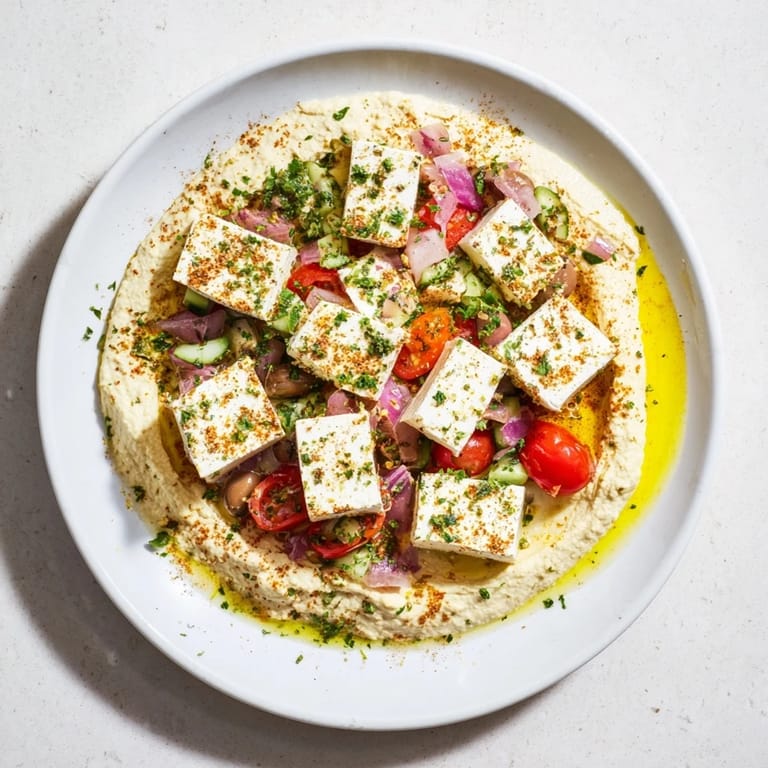
- Feta cheese, cut into rustic cubes (150 g): Don't overthink the cutting—rough, uneven cubes look more inviting than perfect ones. Choose a creamy variety that crumbles beautifully. The slight saltiness is what makes this platter sing.
- Cherry tomatoes, halved (1 cup): These provide brightness and a pop of sweetness. Choose ones that smell fragrant and feel heavy in your hand—they should taste like summer.
- Cucumber, sliced into rounds (1 cup): Cool and crisp, they're the palate cleanser. I prefer leaving the skin on for color and texture, but peel them if you prefer.
- Assorted olives—Kalamata, green, and Castelvetrano (1 cup): This variety matters. Different olives have different personalities: Kalamata are bold and meaty, green olives are briny and sharp, Castelvetrano are buttery and mild. Together they tell a story.
- Roasted red bell pepper, sliced (1 pepper): Sweet and slightly charred. Roast your own if you have time—they'll taste like captured sunshine—but jarred works beautifully too.
- Red onion, thinly sliced (1 small): This adds sharpness and visual drama. The thin slices are important; they soften slightly as they sit and their bite mellows.
- Pita bread, cut into triangles (2 large): Warm them gently before serving if you have time—cold bread feels disappointing against all these vibrant dips. Use gluten-free flatbread if you need to, but warm it regardless.
- Fresh parsley, roughly chopped (1/4 cup): Don't be shy with this. The green is beautiful and the fresh herbaceous flavor is essential.
- Fresh mint leaves, torn (2 tbsp): Mint belongs in Mediterranean food. Tear it gently with your hands rather than cutting it—it bruises less and releases more fragrance.
- Extra-virgin olive oil (2 tbsp for drizzling): This is not the time for ordinary oil. Use something you love, something with personality. The oil is the final flourish that brings everything together.
- Sumac or zaatar, optional (1 tsp): If you have it, use it. That tangy, lemony flavor from sumac changes everything, making the whole platter feel more intentional and complete.
- Sea salt and freshly ground black pepper: Season generously at the end. These humble ingredients deserve proper seasoning.
Tired of Takeout? 🥡
Get 10 meals you can make faster than delivery arrives. Seriously.
One email. No spam. Unsubscribe anytime.
Instructions
- Create Your Foundation:
- Find your largest, most beautiful platter or wooden board. This is your canvas. Arrange the hummus, baba ganoush, and tzatziki in three small, distinct mounds, spacing them evenly around the platter. Think of these as anchors—they don't need to be perfectly round, actually they look better when they're organic and slightly loose. Use the back of a spoon to make gentle indentations and swirls in each dip. This isn't just for looks; those little wells will hold your olive oil like tiny pools of liquid gold.
- Build Your Cheese Moment:
- Take your feta cubes and cluster them together in one area, maybe at the top or bottom of the platter. They should feel like a little treasure pile, rough and inviting. The feta's white color will create beautiful contrast against the colored vegetables you're about to add.
- Paint With Vegetables:
- Now comes the fun part. Arrange your cherry tomato halves, cucumber slices, olives, roasted pepper strips, and red onion slices in loose, organic mounds around the dips and cheese. Don't arrange them in neat rows—this isn't a charcuterie board with military precision. Instead, think about color flow and visual interest. Put red next to green, let some olives nestle near the dips, scatter cucumbers where they feel right. Step back occasionally and look at your work. Is there a spot that feels empty? That's where something belongs.
- Arrange Your Bread:
- Place your warm pita triangles in a separate pile or fan them around the edge of the platter. They're the utensil here, so make them accessible and visible.
- Add Special Touches:
- If you're using artichoke hearts, dolmas, or toasted pine nuts, scatter them in small clusters in the remaining gaps. These are optional but wonderful—they add texture and complexity.
- The Oil and Herb Finale:
- Drizzle that beautiful olive oil generously over the dips, the cheese, and some of the vegetables. Watch as it pools and gleams. Sprinkle your chopped parsley and torn mint across the entire platter. The green brings everything alive. Finish with a small pinch of sumac or zaatar if you have it—this adds a subtle tartness that makes people say 'what is that flavor?' Taste as you go and season with sea salt and black pepper to your liking. The platter should taste bold and properly seasoned, not timid.
- Serve and Celebrate:
- Bring it to the table and watch people's faces light up. Encourage them to help themselves, to mix and match, to create their own flavor combinations. The beauty of a mezza platter is that everyone eats differently, and that's exactly the point.
 Save to Pinterest
 Last summer, my teenage daughter invited friends over, and I made this platter as an afterthought—just something easy for them to snack on. I'll never forget standing in the kitchen listening to them in the other room, their conversation flowing naturally as they lazily grazed, no one rushing, everyone relaxed. That's when I realized this dish does something special: it slows people down, makes them linger, creates space for real connection. It's not fancy or complicated, but it's somehow profound in its own quiet way.
The Art of a Beautiful Arrangement
Making a platter look abundant and intentional is its own skill, but it's simpler than you might think. The key is understanding that negative space matters—leaving some gaps actually makes the platter feel more generous and inviting than packing every inch. Think in terms of clusters rather than lines. Group similar colors together sometimes, but don't be afraid to let a bright red tomato nestle against the deep purple of a Kalamata olive. The colors should feel almost random, but arranged with intention. Step back frequently and look at your platter from different angles. Does one side feel heavier visually? Move something. Is there a spot where the eye doesn't know where to rest? That's where something bright and small belongs. This is food styling in its most humble, honest form.
Building Flavor Layers
What makes a mezza platter truly satisfying is the interplay of flavors and textures. You have creamy (the dips and feta), crispy (the pita), fresh and bright (the vegetables and herbs), salty and bold (the olives and cheese), and rich and smooth (the olive oil). When someone takes a bite that combines several of these elements—maybe some hummus with a piece of warm pita, a bite of feta, a sliver of red onion, and a touch of mint—that's when the magic happens. The flavors aren't meant to be experienced individually; they're meant to play against each other. This is why arrangement matters: it should encourage people to try different combinations, to make small discoveries with each bite.
Making It Your Own
The beautiful thing about a mezza platter is that it's infinitely adaptable. The core elements—dips, cheese, vegetables, bread—are essential, but everything else is flexible based on what you love and what's available. In winter, I might add roasted beets and pomegranate seeds. In summer, I go heavy on fresh herbs and add crispy fried chickpeas for crunch. Sometimes I include a small bowl of labneh or whipped feta mixed with herbs. Other times I add grilled halloumi for people who want something more substantial. The foundation is classic and timeless; the details are yours to play with. Make it a reflection of what's in your kitchen and what's speaking to you that day. That's when it goes from a recipe to something that feels truly yours.
- If you're making this for someone with dietary restrictions, it's easy to customize without losing the spirit of the dish—just swap in plant-based versions of the cheese and yogurt-based dips and nobody will miss a thing
- Prepare everything you can in advance: cut vegetables can sit in water in the fridge for hours, dips taste better when they've had time to marry flavors, bread can be cut and wrapped, ready to warm at the last minute
- Trust your instincts about what belongs on your platter—if you love something, it belongs there, and your guests will taste your enthusiasm in every bite
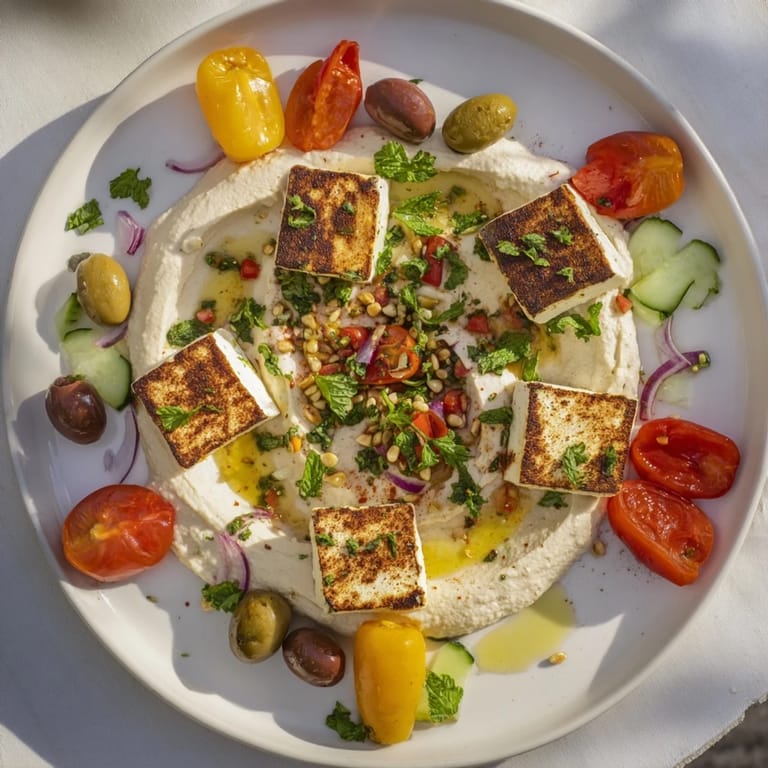 Save to Pinterest
 There's something deeply generous about setting a mezza platter on the table. It says 'I trust you to nourish yourself, to make your own choices, to take what you love.' It's food without pretension, without rules, just abundance and friendship. Make this when you want your table to feel warm.
Ask About This Recipe
- → What dips are featured on this platter?
The platter highlights hummus, baba ganoush, and tzatziki, offering a range of creamy, tangy, and smoky flavors.
- → Can this spread accommodate gluten-free diets?
Yes, by using gluten-free flatbread instead of pita, it can suit gluten-free needs without compromising taste.
- → Which cheeses complement the dish?
Rustic feta cubes add a salty and tangy element that balances the creamy dips and fresh vegetables.
- → What herbs enhance the flavor profile?
Fresh parsley and torn mint leaves provide aromatic brightness, enhancing the overall freshness of the spread.
- → Are there optional ingredients for extra variety?
Yes, marinated artichoke hearts, dolmas, and toasted pine nuts can be added for extra texture and taste variety.
- → How is the platter best served?
Arrange all elements in separate clusters on a large platter and finish with a generous drizzle of extra-virgin olive oil and a sprinkle of sumac or zaatar.