 Save to Pinterest
 My aunt's kitchen in Boston always smelled like the ocean, even on landlocked winter afternoons. One November, she pulled me aside while her chowder simmered and whispered that the secret wasn't the cream or the clams—it was patience and not rushing the roux. That soup taught me that comfort food isn't about complexity; it's about respecting each ingredient enough to let it speak.
I made this for my roommate on her first day back after surgery, and watching her face soften with each spoonful reminded me why this soup has endured for centuries. There's something about clam chowder that dissolves stress and fills the quiet spaces in a kitchen. When she asked for the recipe, I knew I had to get it right.
Ingredients
- Fresh clams or canned clams with juice: The soul of this soup—fresh ones give you briny, mineral depth, but quality canned clams work beautifully if that's what you have on hand.
- Yukon Gold or russet potatoes: Yukon Golds hold their shape better and have a buttery quality, but russets add earthier flavor and thicken the broth naturally as they break down slightly.
- Salt pork or bacon: The fat here is non-negotiable—it renders into liquid gold that builds flavor, so don't skip it or use a lean cut.
- Butter: Use unsalted so you control the seasoning, and don't cheap out; it's your foundation for the roux.
- Heavy cream and whole milk: The combination creates a balanced richness that doesn't feel heavy once it's simmered.
- Clam juice: Bottled clam juice is reliable, but the liquid from steaming fresh clams is liquid magic—use every drop.
- Bay leaf and thyme: These quiet herbs anchor the flavor without screaming; dried thyme is fine and actually more reliable than fresh here.
- All-purpose flour: This creates a proper roux that thickens without lumps or grittiness.
Tired of Takeout? 🥡
Get 10 meals you can make faster than delivery arrives. Seriously.
One email. No spam. Unsubscribe anytime.
Instructions
- Prepare the clams:
- If using fresh clams, scrub them under cold water to remove any sand or grit. In a large pot, combine clams with 1 cup water, cover, and steam over medium heat until the shells open (about 6–8 minutes)—you'll hear little clicks as they release. Discard any stubborn ones that refuse to open, then remove the meat and chop it finely, straining and reserving every drop of that precious cooking liquid.
- Render the salt pork:
- In your Dutch oven or soup pot, cook the diced salt pork over medium heat, listening for the fat to sizzle and watching the meat turn golden and crisp (about 5–7 minutes). Remove it with a slotted spoon and set aside on paper towels, but leave all that rendered fat in the pot—that's your flavor base.
- Build the aromatic base:
- Add butter to the pot and let it melt into the pork fat, then add your diced onion and celery. Sauté gently for about 5 minutes until soft and fragrant but not browned; this is where the sweetness develops. Add minced garlic and cook for just 1 minute more until it stops smelling sharp and raw.
- Make the roux:
- Sprinkle flour directly over the vegetables and stir constantly for about 2 minutes—you're cooking out the raw flour taste and creating a paste that will thicken your chowder. Don't let it brown; you want it pale and creamy.
- Add the liquids carefully:
- Slowly pour in your clam juice while whisking gently to prevent lumps from forming. It takes patience to do this right, but it's the difference between silky soup and grainy soup. Once it's smooth, add the milk and cream in the same careful way, stirring as you go.
- Simmer the potatoes:
- Add your diced potatoes along with the bay leaf and thyme, then let everything simmer uncovered for 12–15 minutes, stirring occasionally so nothing sticks to the bottom. The potatoes should be fork-tender but not falling apart, and you'll notice the broth becoming richer as the potatoes release their starch.
- Finish with clams:
- Add your chopped clam meat (or the canned clams with their juice) and the crispy salt pork back to the pot. Simmer gently for just 3–5 minutes—this is crucial because clams get tough and rubbery if you cook them too long. The heat just needs to warm everything through and marry the flavors.
- Season and serve:
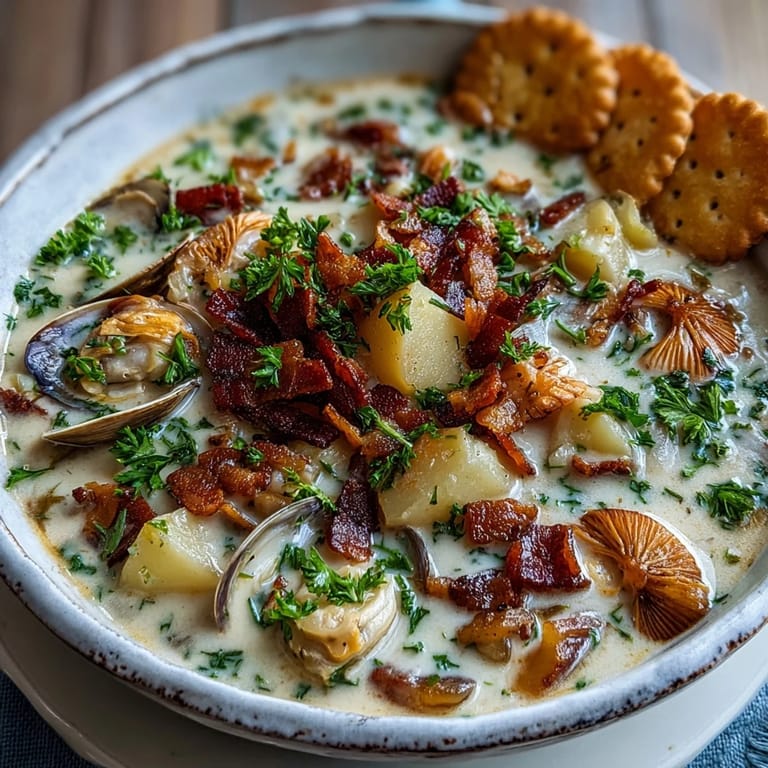
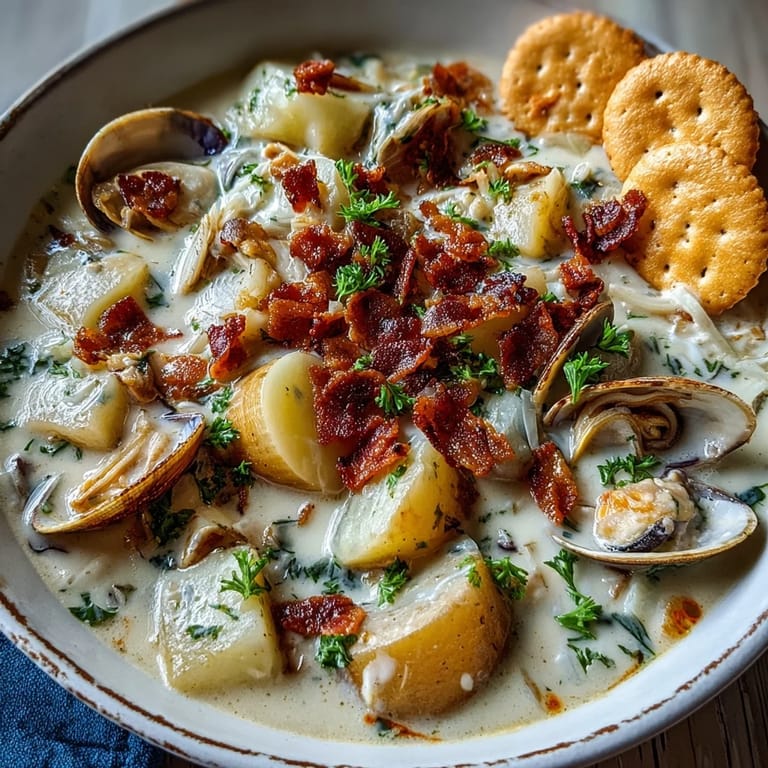
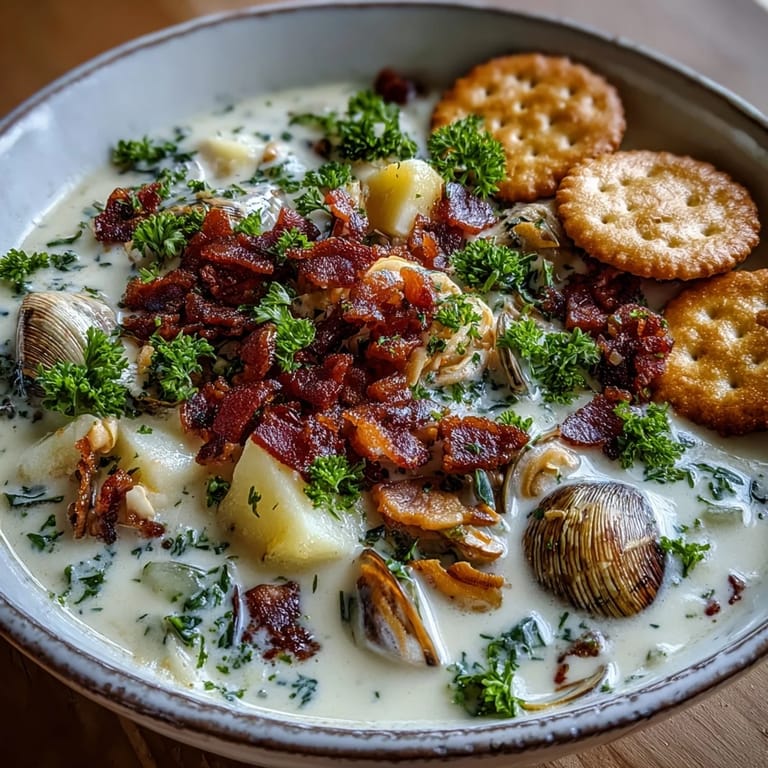
- Remove the bay leaf, stir in fresh parsley, then taste and adjust with salt and black pepper. Ladle into bowls and serve hot with oyster crackers on the side for texture.
 Save to Pinterest
 There was a moment during a snowstorm when I made this soup and my neighbor smelled it from the hallway, followed the scent like a cartoon character, and ended up staying for dinner. That's when I understood that chowder isn't just food—it's an invitation, a warmth you can offer to someone who's cold or lonely or just having a rough day.
Choosing Your Clams
Fresh littleneck clams are traditional and worth seeking out if your fishmonger is reliable, but canned chopped clams are equally legitimate and take the pressure off. I've made this soup both ways more times than I can count, and honest canned clams beat mediocre fresh ones every time. If you go fresh, choose clams that smell like ocean air (not fishy or funky) and are tightly closed or snap shut when tapped.
The Potato Situation
Yukon Golds are my preference because they stay creamy and hold their shape without needing babysitting, but russets work beautifully if that's what you have—they'll break down slightly and naturally thicken the broth even more. The key is cutting them all roughly the same size so they cook evenly and finish at the same time. I've learned to dice them about three-quarters of an inch, which is substantial enough to feel hearty but small enough to cook through in 15 minutes.
Cream Variations and Lighter Options
Heavy cream is traditional, but this recipe bends beautifully if you're watching calories or prefer something lighter. I've made it with half-and-half and even with a mixture of whole milk and a splash of evaporated milk, and each version has its moment. The cream amount here creates a rich, silky texture that's authentic to New England tradition, but you could swap it for half-and-half or even use extra milk if you prefer a brothier chowder that feels less heavy on the stomach.
- Half-and-half creates a chowder that's still creamy but noticeably lighter and less rich.
- Using only milk and butter (skip the cream) gives you a thinner chowder that's still delicious and more budget-friendly.
- Evaporated milk is a secret weapon that adds richness without using heavy cream.
 Save to Pinterest
 This soup tastes even better the next day once all the flavors have had time to mingle and settle. Reheat it gently over medium-low heat, stirring often, and add a splash of milk if it's thickened too much.
Ask About This Recipe
- → Can I use canned clams instead of fresh?
Absolutely. Canned chopped clams work beautifully and save significant preparation time. Use the juice from the cans as part of your clam juice measurement for maximum flavor.
- → Why shouldn't I boil the chowder after adding clams?
Boiling makes clams tough and rubbery. Gentle simmering keeps them tender and preserves their delicate texture. The same principle applies after adding cream—high heat can cause dairy to separate.
- → What's the difference between New England and Manhattan clam chowder?
New England chowder is cream-based with a white, velvety broth. Manhattan version uses tomatoes for a red, broth-style soup. This recipe follows the traditional creamy New England style that most people associate with classic clam chowder.
- → Can I make this ahead of time?
Yes, but prepare without the clams and cream. Refrigerate the base for up to 2 days. When reheating, warm gently, then add cream and clams in the final minutes. This prevents the clams from overcooking and the dairy from separating.
- → What should I serve with clam chowder?
Oyster crackers are the classic accompaniment—their salty crunch pairs perfectly with the creamy broth. Crusty bread, breadsticks, or savory biscuits also work well for soaking up the rich soup.
- → How do I store leftovers?
Cool completely and refrigerate in an airtight container for up to 3 days. Reheat gently over low heat, stirring occasionally. Avoid boiling to prevent separation. The chowder may thicken further in the refrigerator—thin with a splash of milk or cream if needed.