 Save to Pinterest
 I'll never forget the morning I wandered through Pike Place Market in Seattle, completely captivated by a vendor's mushroom display. The way those wild chanterelles, shiitakes, and oyster mushrooms were arranged reminded me of a forest floor I'd explored as a kid in the Cascades. That's when it hit me—I wanted to recreate that woodland magic on a plate, combining earthy fungi with bright berries and toasted nuts to tell a story of the Pacific Northwest I'd grown to love.
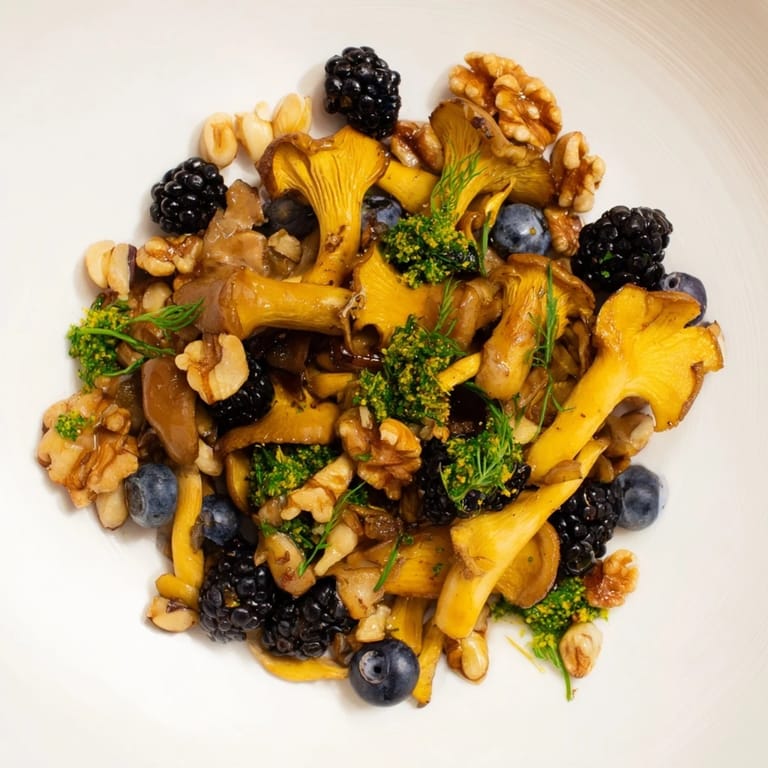
I made this dish for my best friend's dinner party last spring, when the farmers market was finally bursting with fresh berries and wild mushrooms. I remember arranging everything on a large platter in the center of the table, and how everyone went completely quiet for a moment before diving in. One guest actually said it looked like something they'd seen in a high-end restaurant—but what they loved most was how unpretentious and genuine it tasted. That's when I knew this recipe had become something special to me.
Ingredients
- Mixed wild mushrooms (chanterelle, shiitake, oyster), 200 g: These are the soul of the dish—they bring earthiness and umami that makes people close their eyes when they taste it. Clean them gently with a damp cloth rather than washing, as mushrooms absorb water like tiny sponges. If you can't find wild varieties, cremini and portobello work beautifully too.
- Olive oil and unsalted butter, 1 tbsp each: The combination gives the mushrooms a golden, almost nutty finish that simple oil alone can't achieve. Butter adds that luxurious mouthfeel that elevates this from simple to memorable.
- Garlic clove, minced, 1: Just enough to whisper its presence without overpowering the delicate mushroom flavors. Mince it fine so it distributes evenly and doesn't turn bitter.
- Toasted hazelnuts, coarsely chopped, 50 g: Hazelnuts have this sweet, almost buttery quality that feels like a warm hug. Toasting them brings out their personality—that's where the real flavor lives.
- Toasted walnuts, coarsely chopped, 30 g: Walnuts add a slightly earthy, assertive note that balances the sweetness of the hazelnuts and the brightness of the berries.
- Fresh blackberries and blueberries, 80 g and 60 g: These berries are your color and your burst of tartness—they cut through the richness of the nuts and oil like a sharp note in a song. Use them at peak ripeness.
- Fresh flat-leaf parsley, dill, chervil or tarragon, chives, 20 g, 10 g, 10 g, 1 tbsp: This herb combination is what transforms the dish from a simple arrangement into something that tastes sophisticated and alive. The parsley and dill are the backbone, while chervil and chives add delicate, almost anise-like sophistication.
- Lemon zest, 1 small lemon: A small gesture that brings everything into focus, like someone suddenly opening a window to let in fresh air.
- Flaky sea salt and olive oil for the herb moss, 1 pinch and 1 tbsp: Good flaky salt—not table salt—makes a visible, tactile difference. The larger crystals catch light and add a subtle texture that matters.
Tired of Takeout? 🥡
Get 10 meals you can make faster than delivery arrives. Seriously.
One email. No spam. Unsubscribe anytime.
Instructions
- Clean and prepare your mushrooms:
- Gently brush each mushroom with a damp cloth to remove forest debris, then slice them into pieces about the size of your thumb. You want pieces substantial enough to showcase each mushroom's unique texture—some with delicate gills exposed, others with their meaty flesh on display. This is your moment to really see what you're working with.
- Sauté the mushrooms to golden perfection:
- Heat olive oil and butter together in a large skillet over medium heat until the butter is foaming and smells nutty—you'll know it when you smell it. Add your minced garlic and let it sizzle for just 30 seconds, then add all the mushrooms at once. Let them sit undisturbed for a minute so they can develop a golden crust on the bottom—this is where the magic happens. Stir occasionally, cooking for 6 to 8 minutes total until they're tender and have taken on a deep, caramelized color. Season generously with salt and pepper, then transfer to a plate to cool. This is the moment they'll release their most enticing aroma.
- Create your herb moss:
- Finely chop all your fresh herbs until they're almost fluffy and uniform in size—you're aiming for a texture that looks like a delicate moss you'd find on a forest floor. Toss with olive oil, lemon zest, and a small pinch of flaky sea salt, stirring gently until everything is evenly coated and the mixture begins to clump slightly. Taste as you go and adjust salt to your preference. This emerald-colored mixture will be the visual and flavor finale to your plate.
- Toast your nuts until they sing:
- Spread hazelnuts and walnuts on a baking tray and slide them into a preheated 180°C (350°F) oven for 8 to 10 minutes. You're listening and waiting for that rich, toasted aroma to fill your kitchen—that's your signal they're ready. Let them cool until you can handle them, then coarsely chop so you have a mix of larger pieces and smaller bits that distribute flavor throughout.
- Compose your woodland scene:
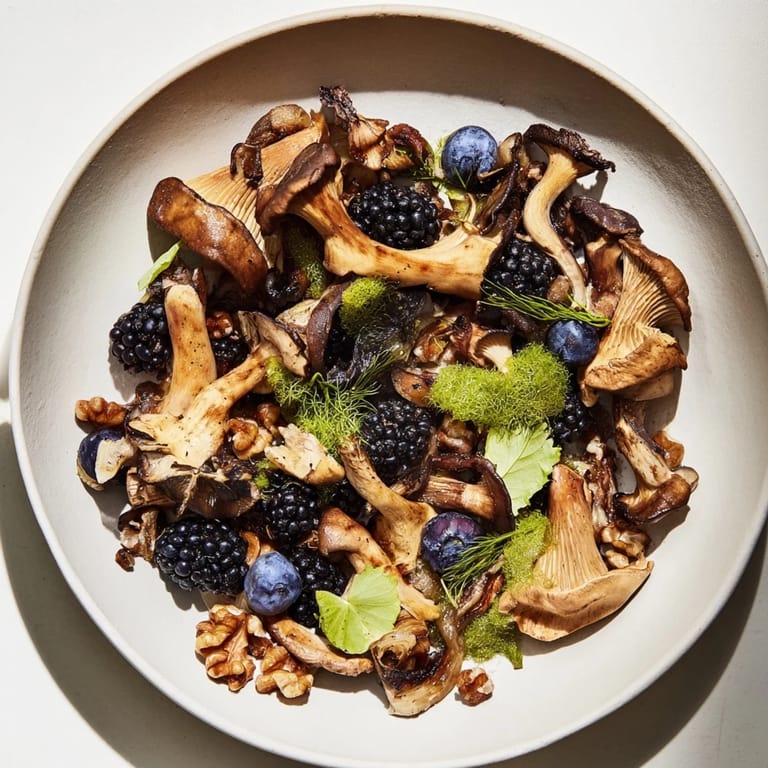
- This is where you become an artist. Use a large platter or individual plates as your canvas. Scatter the cooled mushrooms in clusters, as if they naturally grew in little groups. Nestle the toasted nuts between them—hazelnuts here, walnuts there—creating pockets of texture. Drop the berries into the scene, letting them catch light and create visual contrast. Now generously spoon the herb moss around and between all these elements, letting it drift like actual moss growing through a forest. If using microgreens or edible flowers, scatter them as the final flourish.
- Serve with intention:
- Bring this to the table at room temperature, when all the flavors are fully awake and the visual presentation can really shine. This is a dish that deserves a moment of appreciation before anyone takes the first bite.
 Save to Pinterest
 What moves me most about this recipe is how it transforms humble forest ingredients into something that feels refined and intentional without losing touch with its origins. I served it once to my neighbor who'd just been diagnosed with celiac disease, worried she'd miss out on special meal experiences. Watching her face light up as she took her first bite—realizing it was not only delicious but completely safe for her—reminded me that the best recipes are the ones that include everyone.
Sourcing Your Ingredients Like a Forager
The soul of this dish lives in the quality of what you bring home. If you have access to a farmers market, that's your first stop. Look for mushrooms that are still slightly moist and firm, with no dark spots or sliminess. Wild mushrooms are seasonal—chanterelles arrive in spring and early summer, while shiitakes and oysters are more year-round. Build a relationship with your farmer or market vendor. They'll tell you what peaked that morning and what's worth buying. For the berries, ask when they were picked. Those picked that morning taste entirely different from ones that have been sitting for days. And the herbs—fresh herbs should smell green and alive, not wilted or brown at the edges. If you can't find all three herbs for the moss, substitute with what's available—basil, mint, or even sorrel will work beautifully.
Playing with Variations and Seasons
This recipe is a template, not a law. I've made it with roasted root vegetables—thinly sliced beets and celeriac arranged alongside the mushrooms—and it transformed into something almost luxurious. In winter, when fresh berries feel impossible, I've substituted pomegranate seeds or even cranberries for tartness and color. Pickled shallots add a wonderful brightness and crunch if you want to introduce acidity differently. Some friends have added toasted bread crumbs or crispy chickpeas for more texture, which I thought was brilliant. The key is respecting the balance—if you add something rich, cut it with something bright. If you add something earthy, balance it with something fresh.
Plating with Intention and Confidence
The presentation is half the joy of this dish, so take your time with it and trust your instincts. You don't need to be a professional plater to make this beautiful.
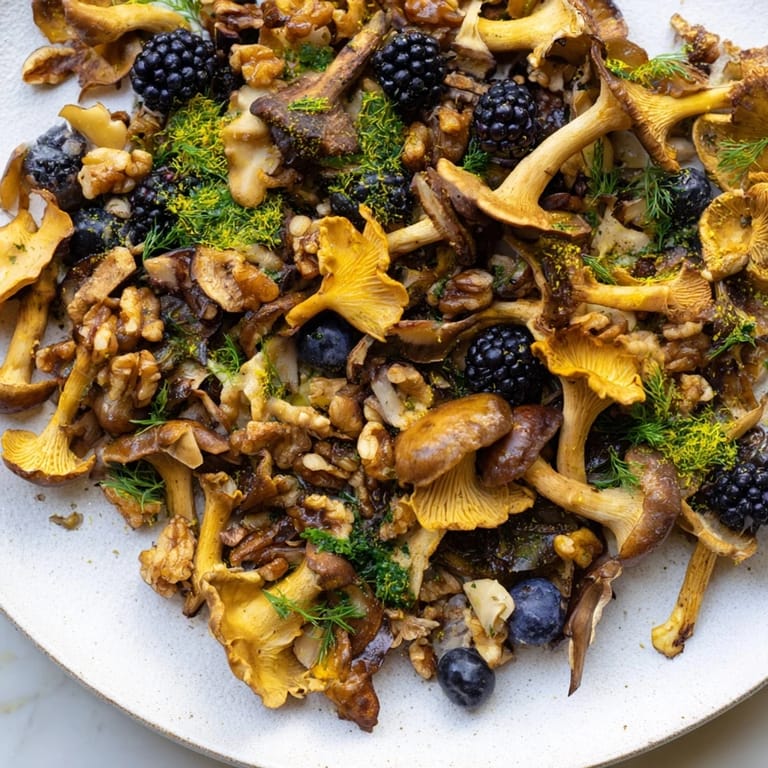
- Step back from your plate occasionally as you arrange to see how the colors and textures are reading together. You want visual interest from every angle—not everything in the center, not everything symmetrical.
- Leave some breathing room. The negative space on your plate is just as important as what you place on it. Let the plate show through between your carefully arranged clusters.
- Think in terms of heights and layers. The herb moss should be the final layer that ties everything together visually, not buried underneath. This is your opportunity to make the dish look vibrant and alive, like you've just brought a piece of the forest to the table.
 Save to Pinterest
 This dish taught me that cooking can be art without being fussy, nourishment without being boring, and impressive without being complicated. Make it for people you love, or make it for yourself on a quiet morning when you need to remember why fresh food matters.
Ask About This Recipe
- → What mushrooms work best for this dish?
Wild varieties like chanterelle, shiitake, and oyster mushrooms offer an earthy depth and texture ideal for this preparation.
- → How is the herb moss prepared?
Finely chop flat-leaf parsley, dill, chervil (or tarragon), and chives, then toss with olive oil, lemon zest, and a pinch of flaky sea salt until slightly clumping.
- → Can nuts be substituted?
Yes, pecans or pine nuts can replace hazelnuts and walnuts for different but complementary earthy flavors.
- → What is the best way to toast nuts?
Spread nuts on a baking tray and toast in a preheated oven at 180°C (350°F) for 8–10 minutes until golden and fragrant, then let cool before chopping.
- → How should this dish be served?
Arrange mushrooms, nuts, and berries in dense clusters on a platter, generously spoon herb moss around them, and garnish with edible flowers or microgreens if desired. Serve at room temperature.