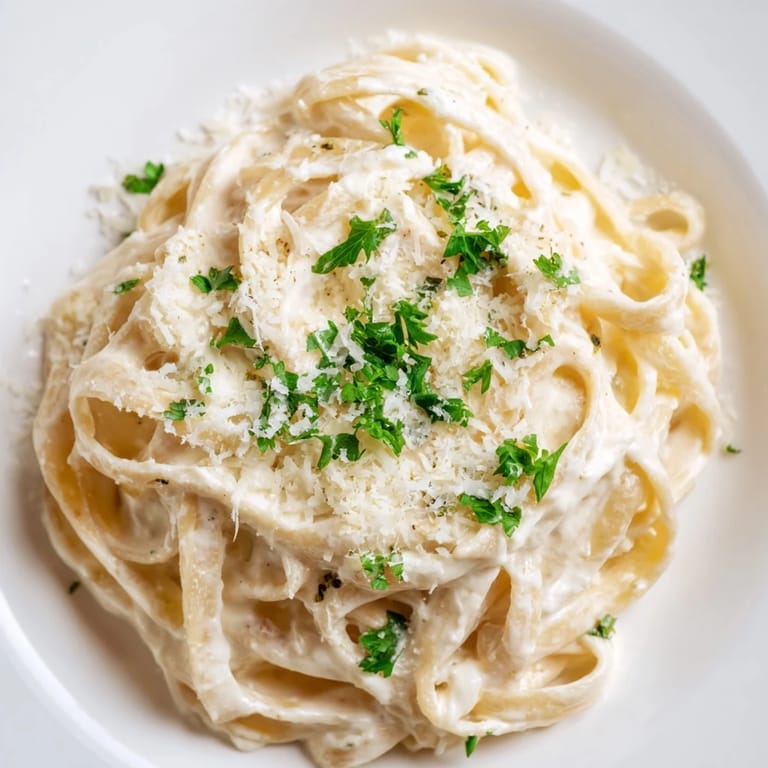
 Save to Pinterest
 I stumbled onto this version of Alfredo completely by accident when I had cottage cheese lingering in my fridge and a craving for something creamy but not heavy. What started as a kitchen experiment turned into my go-to weeknight pasta because it tastes indulgent without that weighted-down feeling you get from traditional cream-based versions. The cottage cheese blends into silk, and honestly, no one guesses what the secret ingredient is until I tell them.
I made this for my roommate on a Tuesday night when she'd had a rough day, and watching her take that first bite and then just sit there in surprised silence was everything. She asked me to write it down immediately, and now it's become her emergency comfort meal too.
Ingredients
- Fettuccine or linguine (350 g): The wider ribbons catch and hold the sauce perfectly, but any pasta shape works if that's what you have on hand.
- Low-fat cottage cheese (1 cup): This is the magic ingredient that creates creaminess without heaviness, and it needs to be blended completely smooth.
- Milk (1/2 cup): Whole or 2% works best; it loosens the cottage cheese into a pourable sauce.
- Grated Parmesan (1/2 cup): Real Parmigiano-Reggiano makes a difference, but pre-grated works in a pinch.
- Unsalted butter (2 tbsp): This is where you build flavor before adding the cheese mixture, so don't skip it.
- Minced garlic (2 cloves): Fresh garlic sautéed in butter becomes sweet and mellow, the foundation of the whole sauce.
- Black pepper and salt (1/4 tsp each): Taste as you go; you might need more Parmesan than salt since the cheese adds plenty.
- Freshly grated nutmeg (pinch, optional): A tiny amount awakens the sauce without announcing itself.
- Fresh parsley (2 tbsp) and extra Parmesan: These finish the dish and make it look like you tried.
Tired of Takeout? 🥡
Get 10 meals you can make faster than delivery arrives. Seriously.
One email. No spam. Unsubscribe anytime.
Instructions
- Get the pasta going:
- Boil salted water in a large pot and cook your pasta to al dente—it should have a slight resistance when you bite it. Before draining, scoop out about 1/2 cup of that starchy cooking water; it's liquid gold for adjusting sauce consistency later.
- Blend the base:
- While pasta cooks, combine cottage cheese, milk, and Parmesan in a blender or food processor and blend until completely smooth with no grainy texture. This step is non-negotiable if you want creamy sauce.
- Build the flavor:
- Melt butter in a large skillet over medium heat, then add minced garlic and let it sizzle for about a minute until it smells incredible but before it turns golden or brown.
- Warm the sauce gently:
- Pour the blended mixture into the skillet with the garlic butter, add salt, pepper, and nutmeg if you're using it, then stir for 2–3 minutes over gentle heat until it steams—do not let it boil or the sauce can break.
- Bring it together:
- Add the drained pasta to the skillet and toss everything to coat evenly in sauce. If it looks too thick, add your reserved pasta water one splash at a time until you reach that perfect glossy consistency.
- Serve right away:
- Plate immediately while everything is hot, finish with a shower of chopped parsley and more grated Parmesan.
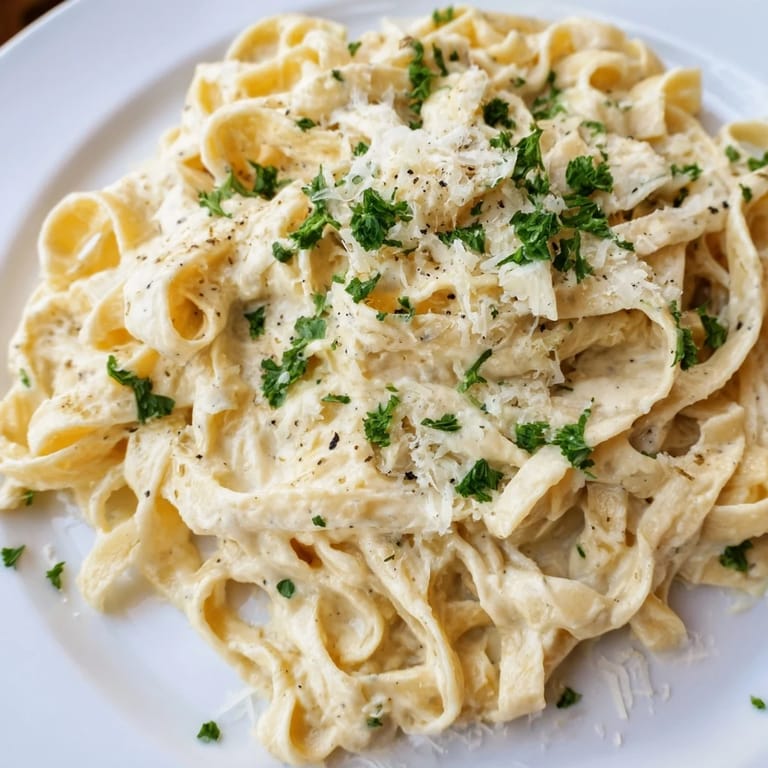 Save to Pinterest
 The first time I served this to my family, my mom tasted it and said, 'This tastes expensive,' which is pretty much the highest compliment in her book. That moment made me realize this dish isn't just about saving time or calories—it's about creating something that feels luxurious despite being so simple.
Why Cottage Cheese Works Here
Cottage cheese gets a bad rap because people think of it as a breakfast food or diet food, but when you blend it with milk and Parmesan, it becomes indistinguishable from cream. The protein content means the sauce stays stable on the pasta longer, and there's something deeply satisfying about making restaurant-quality food from a $3 container of something everyone overlooks. I've converted so many people with this trick.
Timing and Substitutions
This dish is genuinely faster than calling for delivery, which is why I keep cottage cheese stocked permanently now. You can absolutely add cooked chicken, roasted mushrooms, or steamed broccoli to bump up the protein or vegetables without changing the cooking method. Some nights I toss in fresh lemon zest right at the end for brightness, or a handful of spinach that wilts into the sauce.
The Little Details That Matter
Pasta water is the secret weapon that professional cooks use to finish dishes, and a few splashes of it can turn a thick sauce into something silky and perfect. The starch in that water helps the sauce cling to the pasta instead of sliding off. Don't be shy about tasting and adjusting as you go—some Parmesan is saltier than others, so you might need less salt than the recipe says.
- Reserve your pasta water before draining; it's harder to get later and makes all the difference.
- Nutmeg is optional but transforms the sauce into something that tastes like it came from an Italian restaurant.
- Serve immediately because this sauce is best enjoyed hot and fresh from the skillet.
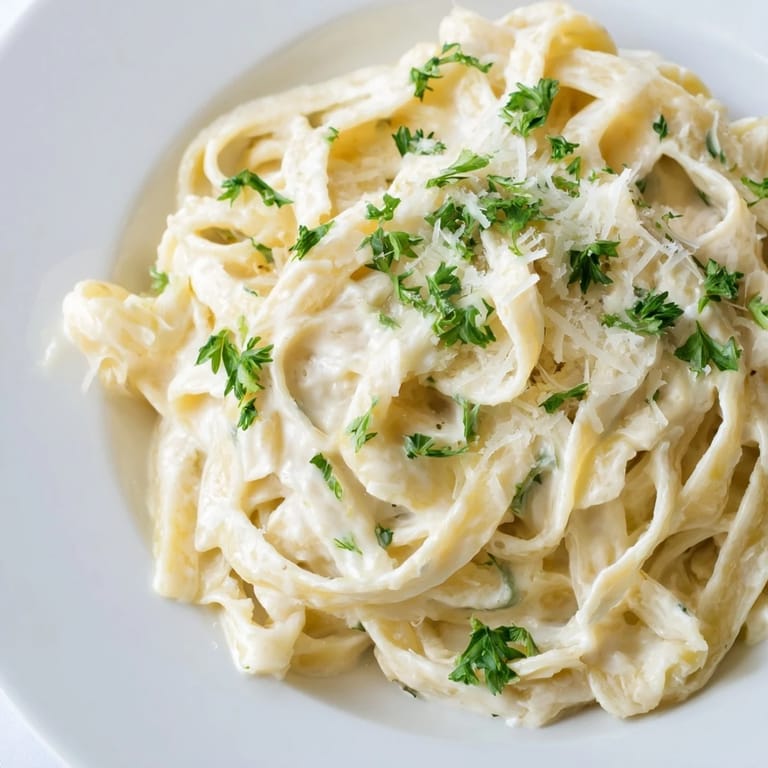 Save to Pinterest
 This recipe proved to me that the best meals don't come from complicated techniques or rare ingredients—they come from knowing one simple hack and trusting it. Make this for someone you care about.
Ask About This Recipe
- → Can I use gluten-free pasta in this dish?
Yes, gluten-free pasta works well as a substitute to accommodate dietary preferences without compromising taste.
- → How do I keep the sauce creamy and smooth?
Blending cottage cheese with milk and Parmesan until smooth helps create a creamy texture. Adding reserved pasta water gradually can adjust consistency perfectly.
- → Is there a way to add more protein to this dish?
Adding cooked chicken or steamed broccoli complements the pasta and boosts protein content while maintaining balance.
- → Can I prepare the sauce ahead of time?
The sauce is best made fresh for smoothness and flavor, but blending the base mixture ahead and reheating gently works if needed.
- → What can I add for extra flavor variations?
Consider adding lemon zest or sautéed mushrooms to enhance brightness and depth without altering the creamy base.