 Save to Pinterest
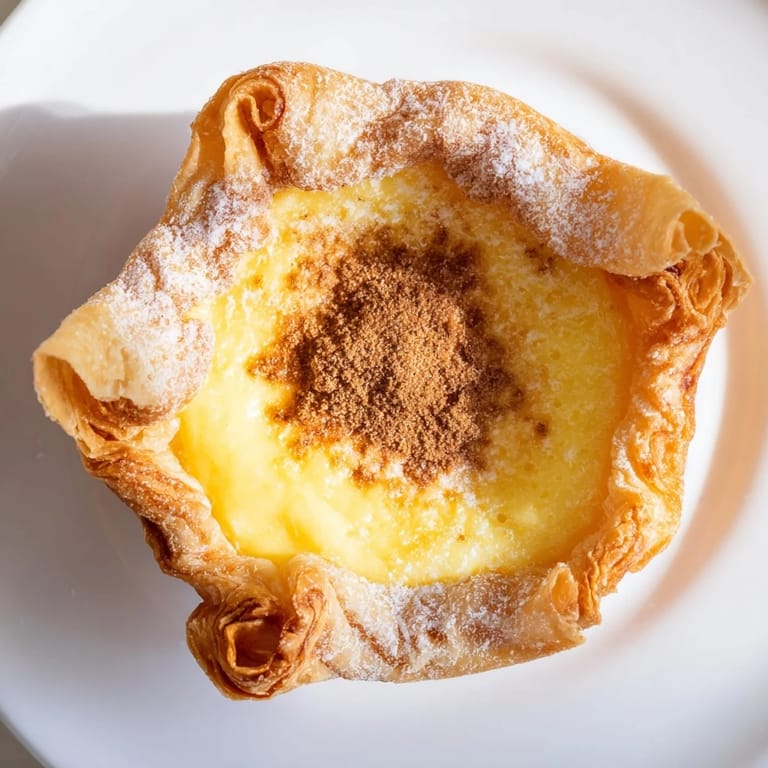
 The first time I bit into a Portuguese egg tart at a café in Lisbon, I understood why locals queue for them at bakeries before dawn. That crispy phyllo shell gave way to the silkiest, most delicately spiced custard I'd ever tasted, warm and barely set, with cinnamon threading through every bite. I spent the next three days chasing the recipe, convinced I could recreate that magic in my own kitchen. When I finally did, my kitchen filled with the exact same smell—buttery, warm, with that distinctive cinnamon note—and I knew I'd captured something real.
I made these for my sister's book club, thinking they'd be a nice addition to the spread. She texted me three hours later asking for the recipe because two people had already asked her where they came from. That small moment—realizing I'd made something people actually wanted to ask about—is when these tarts stopped being just a dessert and became something I'd make again and again.
Ingredients
- Phyllo pastry: These paper-thin sheets are the soul of the tart; they crisp up beautifully when brushed with butter and create that signature shatter when you bite through them.
- Unsalted butter: Melted and brushed between layers, this is what gives the phyllo its golden color and keeps each sheet distinct instead of fusing into a dense block.
- Whole milk and heavy cream: The milk provides structure while the cream adds richness; together they create that silky custard you're after.
- Cornstarch: This is your thickener—it ensures the custard sets just enough to hold its shape without becoming rubbery.
- Egg yolks: These are what make the custard luxurious and glossy; don't skip them or use whole eggs, the difference matters.
- Granulated sugar: Dissolves into the custard base and sweetens without grittiness.
- Pure vanilla extract: A teaspoon is enough to add warmth without announcing itself.
- Ground cinnamon: This is the flavor signature—half a teaspoon in the custard, another dusting on top, so it's present but never overwhelming.
- Powdered sugar: A final gentle dusting that catches the light and adds a whisper of extra sweetness.
Tired of Takeout? 🥡
Get 10 meals you can make faster than delivery arrives. Seriously.
One email. No spam. Unsubscribe anytime.
Instructions
- Heat your oven and gather your station:
- Preheat to 200°C (400°F) and have your muffin tin within arm's reach. This recipe moves quickly once you start, so having everything ready means you won't scramble halfway through.
- Build your phyllo cups:
- Brush each phyllo sheet lightly with melted butter—you want them damp, not swimming in it. Stack three sheets, cut into squares large enough to line your muffin cups, then gently press each stack down into the tin, letting the edges ruffle naturally.
- Bake the shells until golden:
- Eight to ten minutes in the oven will give you that papery crispness. The phyllo should be light golden, almost fragile-looking—that's when you know it's right.
- Whisk your custard base:
- In a medium saucepan, whisk milk and cornstarch together until completely smooth; any lumps now become grainy tarts later. Add the cream, sugar, egg yolks, vanilla, cinnamon, and salt, whisking until everything is combined and pale.
- Cook the custard gently:
- Over medium heat, whisk constantly for five to seven minutes until the custard thickens enough to coat the back of a spoon. You're listening for the whisk to move more slowly through the mixture, and watching for tiny wisps of steam—not a boil, never a boil.
- Fill and finish baking:
- Divide the warm custard evenly among the phyllo cups, filling each one almost to the rim. Return to the oven for eight to ten minutes until the custard looks just set on top with light golden edges.
- Cool, dust, and serve:
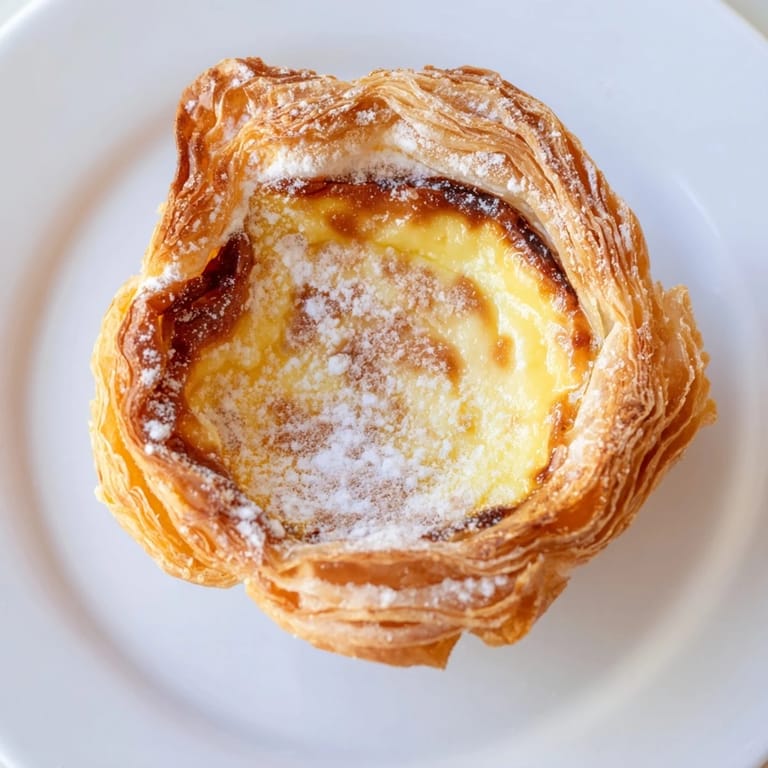
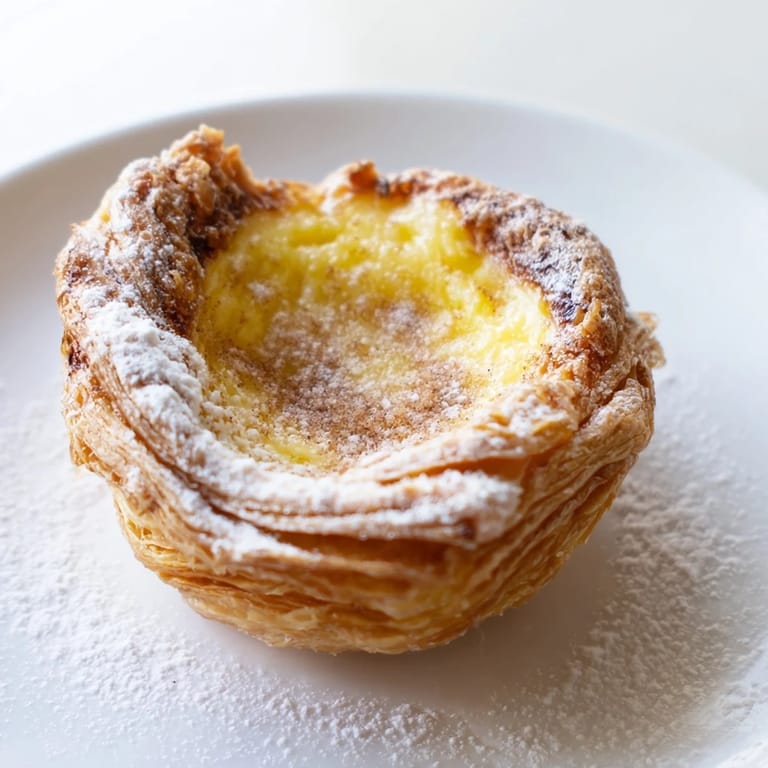
- A few minutes of cooling lets the custard set completely. Then dust each tart with cinnamon and powdered sugar, creating a delicate spiced cloud on top.
 Save to Pinterest
 The moment these came out of the oven, my partner walked into the kitchen and just stopped. He didn't ask questions, he just inhaled, and I watched his entire expression soften. That's when I realized these tarts aren't really about being impressive or complicated—they're about creating a moment where someone forgets to think and just experiences something beautiful.
Why Phyllo Works Here
Phyllo is temperamental in the way that all delicate things are—it dries out if you're not careful, it tears if you're too rough, it burns if you're not watching. But that's also why it's perfect for this dessert. The layers create thousands of tiny air pockets that turn crispy in the oven, and when you bite through them, they shatter and release just a hint of butter before you hit the smooth custard underneath. It's the contrast that makes the whole thing sing.
The Custard is Everything
I learned this the hard way when I tried to make a shortcut version without the cornstarch. It was runny and sad. The cornstarch might seem small, but it transforms the milk and cream into something that holds its shape while staying silky instead of becoming a stiff, pudding-like filling. The egg yolks are what give it that pale golden color and that richness that makes you close your eyes when you taste it—they're not just a binder, they're the reason these tarts feel indulgent.
Storage and Serving Thoughts
These are best eaten warm or at room temperature on the day you make them, when the phyllo still has that satisfying snap. If you do have leftovers (which is rare in my house), store them in an airtight container in the fridge and warm them in a 160°C oven for three to four minutes to restore some crispness. They also freeze beautifully for up to a month—just thaw them gently at room temperature before reheating.
- A small glass of cold white port or a strong espresso is the only accompaniment these need.
- If lemon zest is calling to you, add it to the custard—it won't change the character of the tart, just brighten it slightly.
- These impress people wildly out of proportion to how much effort they require, which makes them excellent for last-minute dinner parties.
 Save to Pinterest
 These Portuguese egg tarts are the kind of dessert that quietly becomes part of your repertoire—not because they're trendy, but because they're genuinely delicious and they make people happy. Make them once and you'll understand why they've been beloved across Portugal for centuries.
Ask About This Recipe
- → How do I make phyllo cups crispier?
Brush each phyllo sheet generously with melted butter before stacking and baking. Baking until golden also enhances crispness.
- → Can I prepare the custard in advance?
Yes, you can make the custard ahead. Cool it completely, then fill the cups and bake just before serving for fresh texture.
- → What can I use instead of powdered sugar for topping?
Cinnamon alone provides a warm spice note, or you can lightly drizzle honey for added sweetness and gloss.
- → What temperature should I bake these tarts at?
Bake phyllo cups initially at 200°C (400°F) until golden, then again with custard to set it gently without curdling.
- → How can I store leftover tarts?
Store leftovers chilled in an airtight container and reheat briefly in the oven to restore crispness before serving.