 Save to Pinterest
 I still remember the first time I stepped into a small trattoria in Tuscany, where an elderly woman emerged from the kitchen carrying the most stunning board I'd ever seen. It wasn't plated with precision—it was gloriously imperfect, layered with aged cheeses, translucent slices of prosciutto, and crusty bread torn by hand. She placed it in the center of our table with a knowing smile and said, "Questo è come mangiamo a casa." This is how we eat at home. From that moment, I understood that the most memorable meals aren't about complicated techniques—they're about gathering good things and sharing them generously.
My favorite version of this board happened on a late summer evening when friends arrived unexpectedly with wine in hand. I had twenty minutes and a fully stocked pantry. As I tore bread and scattered olives, I watched their eyes light up when they saw what appeared before them—not because it was complicated, but because it felt intentional and abundant. That's when I learned that the rustic farmhouse board is less about the ingredients and more about the generosity of spirit it represents.
Ingredients
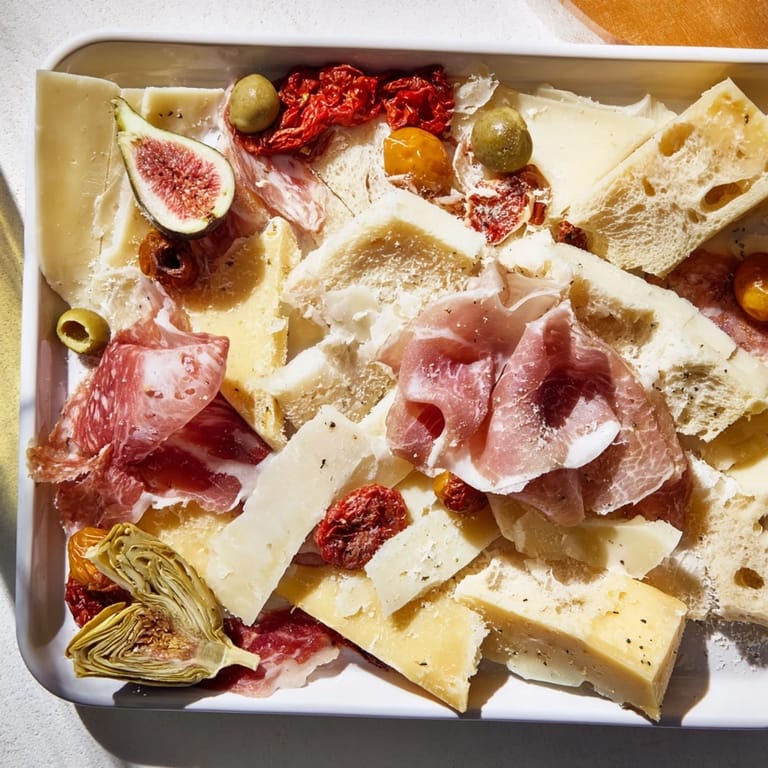
- Parmigiano-Reggiano, broken into large chunks: The backbone of any proper Italian board. Breaking it by hand rather than slicing creates irregular edges that catch the light and invite you to snap off a piece. Look for that crystalline grittiness that means it's been aged properly—usually at least 24 months.
- Pecorino Toscano, cut into wedges: This is where the rustic funk comes in. It's sharper and more assertive than Parmigiano, and a little goes a long way. The key is not to slice it too thin—wedges let people break off exactly what they want.
- Taleggio, torn into rustic pieces: The creamy, almost buttery surprise on the board. It's a washed-rind cheese that smells stronger than it tastes. Tearing it frees you from perfectionism and adds to that farmhouse aesthetic.
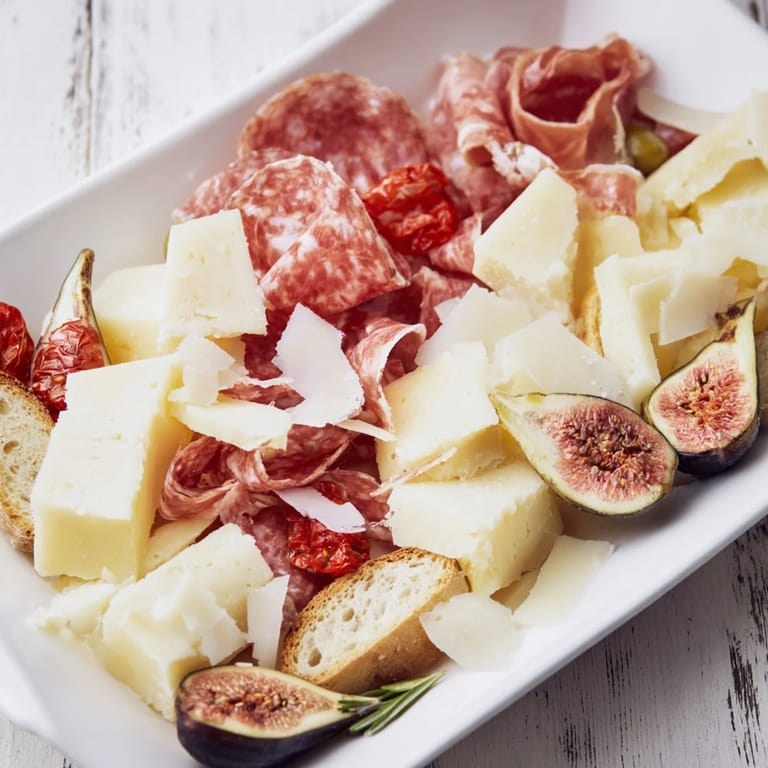
- Prosciutto di Parma, loosely piled: Let it rumple and fold naturally. Never lay it in perfect rows—the appeal is in the delicate, almost translucent layers that seem to float on the board. Handle it gently; it's paper-thin and wants to be beautiful.
- Finocchiona salami, thickly sliced: The fennel-kissed salami that's distinctly Tuscan. Thick slices show off the marbling and the subtle anise flavor. It's less aggressively spiced than some salamis, making it approachable even for those cautious about cured meats.
- Coppa, arranged in rustic folds: Rich, marbled, and deeply savory. The folds create shadows and texture on the board. It pairs beautifully with sharp cheese and sweet fruit, balancing everything on your palate.
- Rustic Italian loaf torn into rough pieces: Use day-old bread if you have it—it tears more dramatically and doesn't crumble. The rough texture is part of the charm. A ciabatta or pane toscano (which is traditionally made without salt) works perfectly.
- Castelvetrano olives: These green Sicilian olives are buttery and mild, almost sweet. They're the bridge between the salty cured meats and everything else on the board. Their color brings visual brightness too.
- Sun-dried tomatoes in olive oil, drained: These concentrated bursts of umami and tanginess cut through the richness beautifully. Drain them well so they don't make the bread soggy, but save that oil for drizzling.
- Marinated artichoke hearts, quartered: The acidity here is your friend. It cleanses your palate and adds textural variety. Quartering them makes them easier to grab and more visually appealing than halves.
- Fresh grapes or figs, halved: The sweetness is essential. If using grapes, choose red ones for color contrast. Figs are pure luxury—their jammy interior against the slight chew of the skin is sublime with aged cheese.
- Extra-virgin olive oil for drizzling: Use something you actually love. This is the final flourish. A generous drizzle over the bread and cheeses brings everything together and adds a glossy, inviting sheen.
- Fresh rosemary sprigs for garnish: Tear them slightly as you place them so the fragrance releases. It's not just decoration—people will nibble on these, and their piney aroma sets the tone.
- Coarse sea salt and cracked black pepper: Don't undersalt this. The board needs assertive seasoning to stand up to the bold flavors of aged cheese and cured meat. Taste as you go and adjust—some of your ingredients already have salt, but the seasoning happens at the end.
Tired of Takeout? 🥡
Get 10 meals you can make faster than delivery arrives. Seriously.
One email. No spam. Unsubscribe anytime.
Instructions
- Start with the foundation:
- Place your large wooden board or platter in front of you. This is your canvas. Wooden boards are ideal because they absorb a little of the oils and flavors, and they warm to room temperature—no cold slate energy here. If you don't have a wooden board, use your largest platter or even a cutting board. The imperfection is part of the charm.
- Arrange the cheeses with intention:
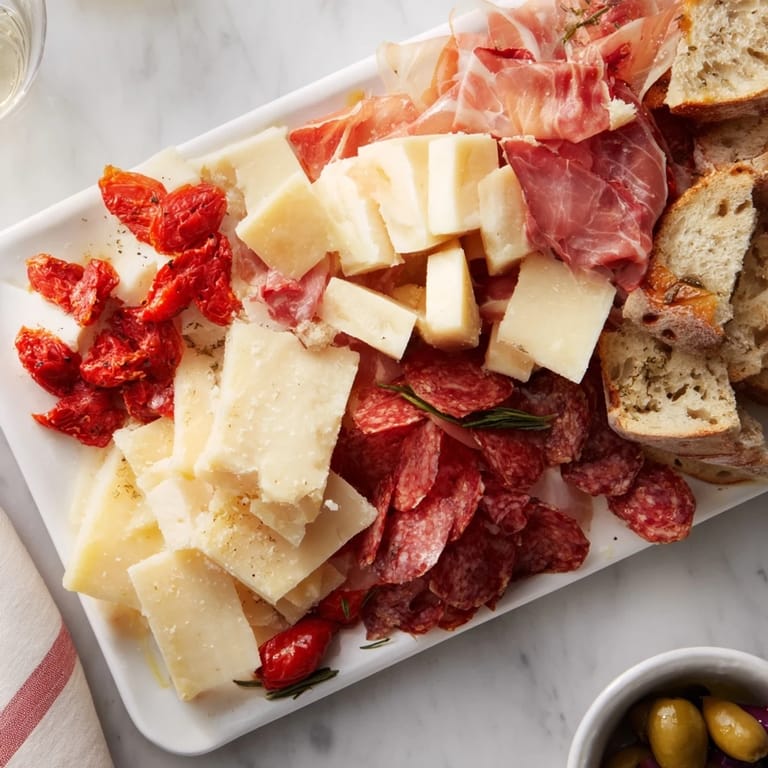
- Break the Parmigiano-Reggiano into irregular, angular chunks—not delicate slivers, but generous pieces that show off those crystalline fractures. Scatter them across the board with gaps between, as if you're not thinking too hard about it. Add the Pecorino wedges in another spot, then tear the Taleggio and pile it loosely. You're creating zones of flavor and color, not a uniform distribution. Think of how a medieval feast board would look—generous, varied, inviting.
- Build the meat landscape:
- Take your prosciutto and let it rumple and fold as it naturally wants to. Pile it loosely in one corner or drape it gently over a wedge of cheese. Next, arrange the finocchiona slices in overlapping layers—they should feel abundant and touchable. Finally, fold the coppa in on itself, creating soft ridges and shadows. The cured meats shouldn't be uniform; they should look like someone who knows what they're doing arranged them casually.
- Scatter the bread strategically:
- Tear your loaf into rough, uneven pieces—some larger, some smaller. Don't make them all the same size. Scatter them around the board, tucking some into gaps and leaving others more prominent. The bread is both structural and structural; it holds other ingredients and stands on its own as something to reach for.
- Fill the gaps with abundance:
- Now for the finishing ingredients. Pile your olives in a small cluster or two, not spread out evenly. Do the same with the artichoke hearts. Create little mounds of sun-dried tomatoes. Scatter your grapes or figs so their color catches the eye. You're not trying to cover every inch—you're creating pockets of color and flavor that make the board feel alive and generous.
- Anoint and garnish:
- Drizzle your best olive oil lightly over the cheeses and bread. Not too much—you want it to glisten, not pool. Tear a few rosemary sprigs and scatter them across, tucking them into the nooks and crannies. The fragrance will rise as people gather around.
- Season with confidence:
- Sprinkle coarse sea salt and cracked black pepper across the board. Be generous with the salt—remember that the cured meats are already salty, but they need this final seasoning to shine. Crack pepper over the cheeses especially. Taste the bread with a tiny pinch before people arrive to make sure your seasoning is right.
- Serve immediately:
- This is not something to make hours ahead. The bread will gradually absorb oil and soften, the cheese will warm and become creamier, and the whole thing will begin to merge. That's beautiful, but the initial moment of freshness—when everything is at its most distinct and inviting—is magic. Bring it to the table and watch people's faces light up.
 Save to Pinterest
 The moment I truly understood this dish was when my grandfather, a man who grew up on small farmhouse meals in Piedmont, looked at a board I'd made and didn't say it was beautiful or impressive. He just nodded, picked up a piece of bread, layered it with prosciutto and Taleggio, and smiled. That smile said everything—this was home, this was generous, this was exactly right.
The Art of Breaking, Not Slicing
Here's something that transformed how I think about charcuterie boards: the difference between slicing and breaking. When you slice cheese and meat with precision, you're declaring mastery. When you break, tear, and fold, you're inviting people into something more relaxed and genuinely Italian. The Parmigiano should fracture along its natural crystals. The prosciutto should ripple and fold because you've barely touched it. The bread should tear unevenly, some pieces thicker, some almost translucent. This isn't laziness or lack of skill—it's the opposite. It's the confidence to know that perfection feels cold, but authenticity feels like home. Every time I make this board, I remind myself to put the knife down earlier than feels natural and let my hands finish the work.
Wine Pairings and What to Serve Alongside
The soul of this board is sharing, which means the experience extends beyond what's on the platter. A robust Chianti is the obvious choice—its acidity cuts through the richness of the aged cheese and cured meats, while its slight tannins don't fight with the food. But honestly, a Sangiovese from Tuscany (the heartland of these ingredients) feels like the conversation continuing. If you're serving in warm weather, a chilled Vermentino or even a dry rosé works beautifully. The key is something with enough personality to stand up to these bold flavors, but nothing so heavy it overwhelms the delicate prosciutto. Beyond wine, set out small plates and good napkins—more than you think you'll need. Have a cutting board nearby for anyone who wants to slice more cheese. Set out small spreads for the bread. And crucially, have good water. It seems simple, but the contrast between the salt and fat and then cool water is part of the rhythm of eating this way.
Customization and Seasonal Variations
The beauty of a farmhouse board is that it's a conversation starter, not a rigid formula. In spring, swap the figs for fresh strawberries or asparagus tips. In autumn, add toasted nuts—walnuts and hazelnuts feel particularly at home here. Gorgonzola is a stunning substitution for Pecorino if you want blue cheese funk instead of sheep's milk sharpness. Asiago brings a nuttier note. Some versions I've made include roasted red peppers for sweetness and texture, or pickled mushrooms for that briny, umami punch. The secret is maintaining the balance: you want contrast in flavors (sharp, salty, sweet, acidic), contrast in textures (creamy, firm, chewy, crisp), and contrast in colors. If you're building a winter version, consider adding a drizzle of hot honey over sharp cheeses—the heat and sweetness are transcendent. Trust your instincts and build a board you would want to reach for.
- Don't be afraid to add something unexpected—hot honey, a spoonful of mostarda, or roasted almonds can shift the entire experience in a beautiful way.
- Always taste elements before committing them to the board. If something tastes off or old, it will drag everything else down.
- Remember that the board will continue to evolve as it sits. Room temperature cheeses become creamier, oils mingle, and flavors develop. This is part of the magic, not something to prevent.
 Save to Pinterest
 This board is an invitation to slow down and share. It says you've thought about your guests, that you care about quality, and that you trust them to find what delights them. That's something to be proud of.
Ask About This Recipe
- → What types of cheese are included on the board?
The board features Parmigiano-Reggiano, Pecorino Toscano, and Taleggio, each broken or torn into rustic chunks for texture and visual appeal.
- → Which cured meats are arranged on the platter?
Prosciutto di Parma, Finocchiona salami, and Coppa are layered in generous, overlapping folds to enhance flavor and presentation.
- → What accompaniments complement the cheeses and meats?
Castelvetrano olives, sun-dried tomatoes in olive oil, marinated artichoke hearts, and fresh grapes or figs add bright, contrasting flavors.
- → How is the bread prepared for the board?
A large rustic Italian loaf, such as ciabatta, is torn into rough pieces to complement the textures of the cheeses and meats.
- → Are there any seasoning or garnishes used?
The board is lightly seasoned with coarse sea salt and cracked black pepper, finished with a drizzle of extra-virgin olive oil and fresh rosemary sprigs for aroma.
- → Can the cheeses be substituted?
Yes, variations like Gorgonzola or Asiago can be used to customize flavors and textures on the board.