 Save to Pinterest
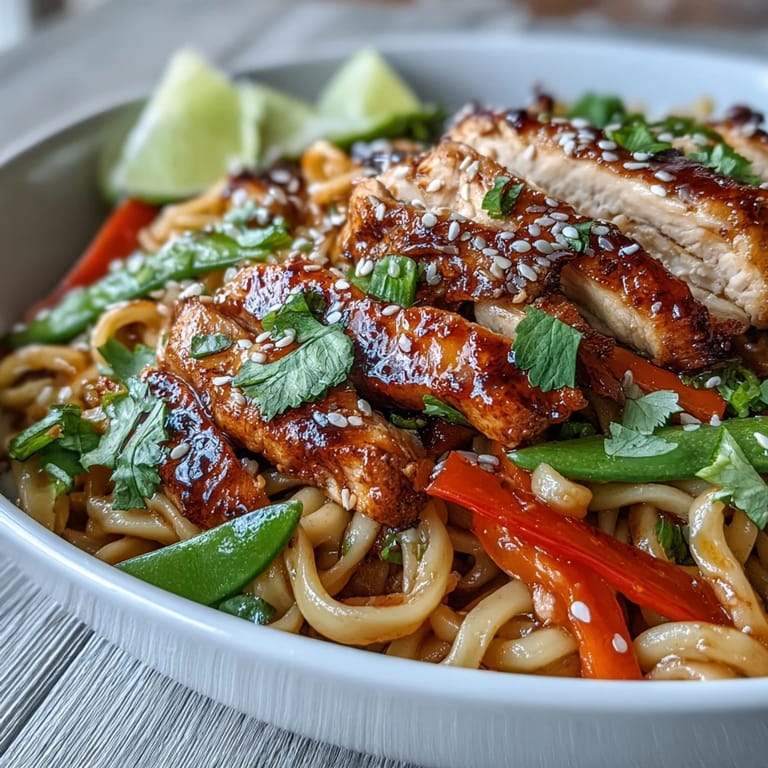
 It was a Tuesday night when I realized I had three different half-used noodle packages in the pantry and a craving I couldn't quite name. I pulled out a wok, some chicken thighs from the fridge, and started chopping whatever looked bright in the vegetable drawer. The smell of ginger hitting hot oil filled the kitchen, and suddenly I knew exactly what I was making. What started as pantry rummage turned into a bowl so good I've been making it on repeat ever since.
I made this for a friend who swore she didn't like sesame oil. She finished her bowl before I even sat down, then asked if there were seconds. We ended up sitting on the kitchen counter eating straight from the pan, laughing about how wrong first impressions can be. That night, she admitted sesame oil wasn't the problem, bland recipes were.
Ingredients
- Boneless, skinless chicken breast or thighs, 500 g (1 lb), thinly sliced: Thighs stay juicier and more forgiving if you slightly overcook them, but breasts work beautifully if sliced thin against the grain.
- Dried udon, soba, or rice noodles, 250 g (9 oz): Each noodle type brings a different chew, udon is thick and slippery, soba is nutty, rice noodles are delicate and light.
- Red bell pepper, 1, thinly sliced: Red peppers add a natural sweetness and gorgeous color that makes the bowl look as good as it tastes.
- Carrot, 1 medium, julienned: Thin matchsticks cook fast and add a slight crunch that contrasts perfectly with tender noodles.
- Sugar snap peas, 100 g (3.5 oz), trimmed: These pop with freshness and stay crisp even after a quick stir-fry, adding texture and brightness.
- Spring onions, 2, sliced: They bring a mild onion flavor and a pop of green that finishes the bowl with a fresh note.
- Low-sodium soy sauce, 60 ml (4 tbsp): Low-sodium gives you control over the salt level, and it lets the other flavors shine without overwhelming the dish.
- Brown sugar, 2 tbsp: It adds a deep, caramel-like sweetness that balances the salty soy and tangy vinegar beautifully.
- Toasted sesame oil, 1 tbsp: A little goes a long way, this oil is the soul of the sauce with its warm, nutty aroma that makes everything smell like comfort.
- Rice vinegar, 1 tbsp: It cuts through the richness with a gentle tang that keeps each bite lively and balanced.
- Fresh ginger, 2 tsp, grated: Fresh ginger adds a bright, spicy warmth that dried ginger just can't replicate, so grate it finely for even distribution.
- Garlic, 2 cloves, minced: Garlic brings a savory depth and fragrance that makes the kitchen smell like something special is happening.
- Cornstarch, 1 tsp (optional): This helps the sauce cling to the noodles and chicken instead of pooling at the bottom of the bowl.
- Toasted sesame seeds, 2 tbsp: They add a nutty crunch and visual appeal, plus toasting them yourself makes the kitchen smell incredible.
- Fresh coriander or cilantro, chopped: A handful of fresh herbs lifts the whole dish with a burst of brightness right before serving.
- Lime wedges (optional): A squeeze of lime at the table adds a zesty kick that wakes up all the other flavors.
Tired of Takeout? 🥡
Get 10 meals you can make faster than delivery arrives. Seriously.
One email. No spam. Unsubscribe anytime.
Instructions
- Get the noodles ready:
- Cook the noodles according to package directions, then drain and rinse them under cold water to stop the cooking and keep them from turning mushy. Set them aside while you prep everything else.
- Mix the magic sauce:
- In a small bowl, whisk together soy sauce, brown sugar, sesame oil, rice vinegar, grated ginger, minced garlic, and cornstarch if you're using it. The cornstarch will help it thicken into a glossy coating.
- Sear the chicken:
- Heat a large nonstick skillet or wok over medium-high heat with a splash of oil, then add the sliced chicken in a single layer. Let it brown for 4 to 5 minutes, stirring occasionally, until cooked through and golden at the edges, then remove and set aside.
- Stir-fry the vegetables:
- Add a bit more oil to the same pan if it looks dry, then toss in the bell pepper, carrot, and snap peas. Stir-fry for 2 to 3 minutes until they're tender but still have a satisfying crunch.
- Bring it all together:
- Return the chicken to the pan, pour in the sauce, and toss everything to coat evenly. Let it simmer for 1 to 2 minutes until the sauce thickens slightly and clings to every piece.
- Toss in the noodles:
- Add the cooked noodles and sliced spring onions, then toss well to combine and heat everything through. The noodles should be glossy and coated in that sweet-savory sauce.
- Serve it up:
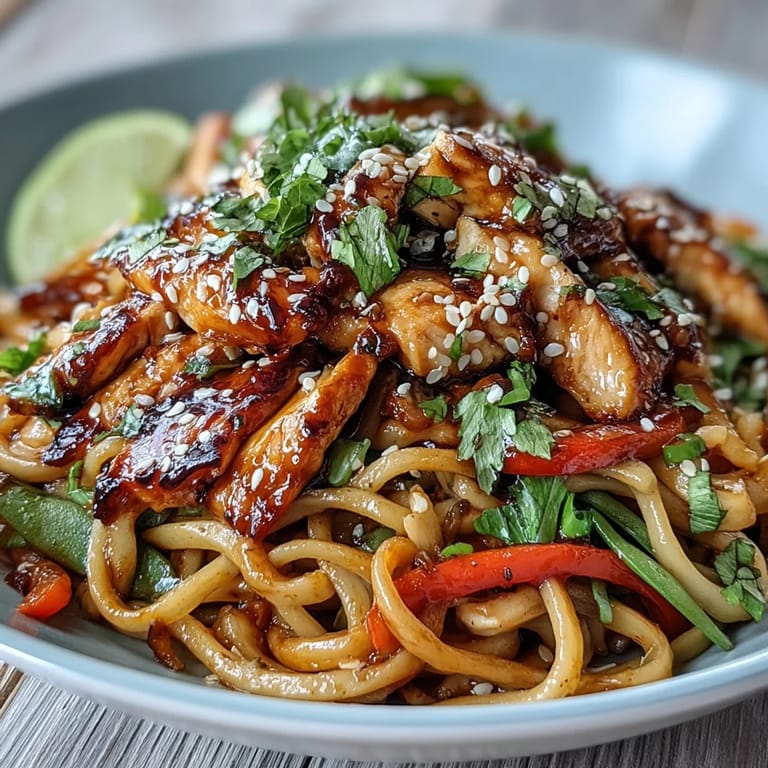
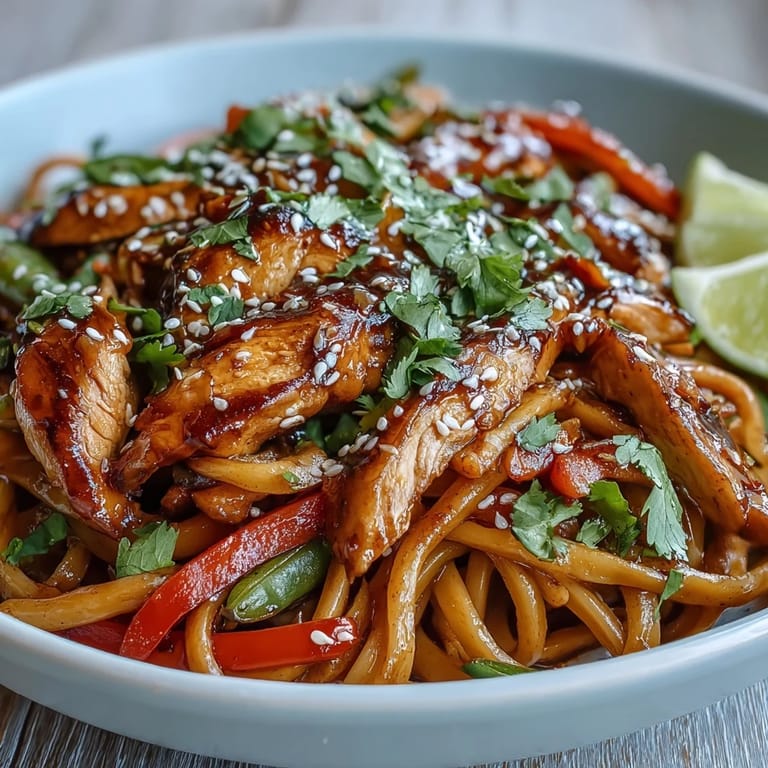
- Divide the noodle mixture among bowls and garnish with toasted sesame seeds, fresh coriander, and lime wedges if you like. Serve immediately while everything is hot and fragrant.
 Save to Pinterest
 One Sunday afternoon, I made a double batch of this and brought it to a potluck where everyone had signed up for complicated casseroles and roasts. My bowl was gone in minutes, and three people asked for the recipe before dessert was even served. It reminded me that sometimes the simplest, fastest dishes are the ones people remember and crave the most.
Making It Your Own
This bowl is endlessly adaptable, and I've learned to treat the recipe more like a template than a rulebook. Swap the chicken for thinly sliced tofu, shrimp, or even thinly sliced beef if that's what you have. I've added broccoli florets, baby corn, mushrooms, and even leftover roasted sweet potato with great results. If you like heat, a teaspoon of chili garlic sauce or a pinch of red pepper flakes stirred into the sauce transforms it into something bold and fiery.
Storing and Reheating
Leftovers keep well in an airtight container in the fridge for up to three days, though the noodles may absorb some of the sauce as they sit. When reheating, I add a splash of water or a drizzle of sesame oil to loosen everything up, then warm it gently in a skillet over medium heat. The microwave works too, but the skillet brings back that fresh-from-the-wok feel. I've even eaten it cold straight from the fridge on a hot day, and it was surprisingly refreshing.
Serving Suggestions
This bowl is a complete meal on its own, but sometimes I like to serve it alongside a simple cucumber salad dressed with rice vinegar and a pinch of sugar for extra crunch. A crisp, chilled Sauvignon Blanc or a light lager pairs beautifully with the sweet and savory flavors. If you're feeding a crowd, set out small bowls of extra sesame seeds, sliced chilies, lime wedges, and fresh herbs so everyone can customize their bowl at the table.
- Add a soft-boiled egg on top for extra richness and a creamy yolk that mixes into the sauce.
- Sprinkle with crushed peanuts or cashews for added crunch and a hint of indulgence.
- Serve with a side of pickled ginger or kimchi to cut through the richness and add a tangy contrast.
 Save to Pinterest
 This bowl has become my go-to whenever I need something fast, flavorful, and deeply satisfying without a lot of fuss. It's proof that dinner doesn't have to be complicated to feel like a real treat.
Ask About This Recipe
- → What type of noodles work best?
Udon, soba, or rice noodles all work beautifully. Udon offers a chewy texture, soba adds a nutty flavor, and rice noodles keep it light. Choose based on preference or what's available in your pantry.
- → Can I make this vegetarian?
Absolutely. Substitute the chicken with firm tofu, pressed and cubed. Fry the tofu until golden before adding vegetables. The sauce and seasonings work perfectly with plant-based protein.
- → How spicy is this dish?
The base version is mild with no heat. For spice, add chili flakes, sriracha, or fresh sliced chili to the sauce. Adjust the amount to match your preferred heat level.
- → Can I prep ingredients ahead?
Yes. Slice vegetables and chicken up to 24 hours in advance. Store them in separate airtight containers in the refrigerator. The sauce can be whisked together and kept for 2-3 days before cooking.
- → What vegetables can I add?
Broccoli florets, sliced mushrooms, baby corn, or bok choy make excellent additions. Add heartier vegetables like broccoli earlier in the stir-fry process so they cook through properly.
- → How do I store leftovers?
Store cooled leftovers in an airtight container for up to 3 days. Reheat gently in a skillet or microwave, adding a splash of water if noodles have absorbed all the sauce.