 Save to Pinterest
 While I&39;d eaten plenty of restaurant ramen, my first attempt at homemade miso ramen happened on a damp autumn evening when the chill was just enough to justify simmering a big pot. The way the ginger and garlic hit the pan instantly made the whole house smell inviting. I&39;d always assumed ramen seemed fussy, but watching the broth slowly deepen in color made it feel achievable and even fun. Each ingredient added its own melody to the bubbling pot. Stirring in the miso, I realized there&39;s a simple joy in building a bowlful of comfort from scratch.
One rainy Friday, we invited friends for a ramen night—not really knowing if we were up for the task. There was laughter over overfilled noodle pots and steam-fogged glasses as everyone embellished their bowls with extra corn or spinach. We ended up swapping stories around the table with nori strips and sesame seeds scattered everywhere. For hours after, the kitchen hummed with a savory-sesame aroma. That evening, the dish became more than food—it became a way to gather and warm up together.
Ingredients
- Low-sodium vegetable broth: Starting with a lighter broth gives you more control over saltiness, plus it lets the miso truly shine.
- White miso paste: I learned that whisking it in separately keeps it silky and prevents clumping, so don&39;t skip this trick.
- Soy sauce: Deepens the umami and savory notes—taste and adjust as you go.
- Sesame oil: A little goes a long way for nutty aroma, so drizzle gently.
- Fresh ginger: Grated fresh makes all the difference and livens up the broth with gentle heat.
- Garlic cloves: Mince them right before cooking for the most potent fragrance.
- Mirin (optional): A splash sweetens and rounds out the flavors, but you can leave it out or swap with a sprinkle of sugar in a pinch.
- Chili paste (optional): Adjust for your comfort level—adding just a bit gives a lovely back-of-throat warmth.
- Ramen noodles: Fresh ones are bouncy, dried work fine—both love soaking up the broth.
- Eggs: Timing is everything for perfect jammy yolks—set a timer to avoid overcooking.
- Shiitake or cremini mushrooms: They soak up all that umami, making every bite deeply satisfying.
- Baby spinach: Tossed in last, it wilts quickly and adds a welcome burst of green.
- Corn kernels: Even frozen works—they bring a juicy sweetness that brightens the bowl.
- Green onions: Their crisp bite on top is a must for balance.
- Nori: Cut into ribbons, it delivers deliciously briny notes—don&39;t forget to add right before serving so it stays crisp.
- Toasted sesame seeds: Sprinkle with abandon for subtle crunch and nutty flavor—toast them lightly if you have time.
Tired of Takeout? 🥡
Get 10 meals you can make faster than delivery arrives. Seriously.
One email. No spam. Unsubscribe anytime.
Instructions
- Soft-boil the eggs:
- Lower the eggs gently into barely simmering water, and try not to wander off—it&39;s just seven minutes for that dreamy yolk. When the timer chimes, give them a quick spin in ice water to stop the cooking, then peel them with care.
- Start the base:
- In your biggest pot, warm the sesame oil over medium heat and listen for that gentle sizzle as ginger and garlic hit the surface—let them release their fragrance for just a couple minutes.
- Sauté the mushrooms:
- Add the mushrooms and stir as they soften and shrink, turning silky and rich in just a few minutes.
- Simmer the broth:
- Pour in the vegetable broth with a satisfying whoosh, followed by soy sauce and mirin if you have it—bring everything to a gentle simmer so the flavors meld for about 10 minutes.
- Miso magic:
- Ladle out a scoop of hot broth and whisk in the miso paste separately until smooth, then swirl it back in—this step means no clumps and pure creamy comfort, with chili paste added at this stage if you like punch.
- Taste check:
- Dip in a spoon and taste—is it balanced or does it need a touch more soy or miso? Adjust in tiny increments to your perfection.
- Cook the noodles:
- Meanwhile, get water boiling in another pot and cook the noodles according to package directions—keep an eye so they stay springy, not mushy.
- Assemble the bowls:
- Divide the steamy noodles among bowls, then ladle that golden miso broth right over top—the kitchen will smell incredible right now.
- Add toppings:
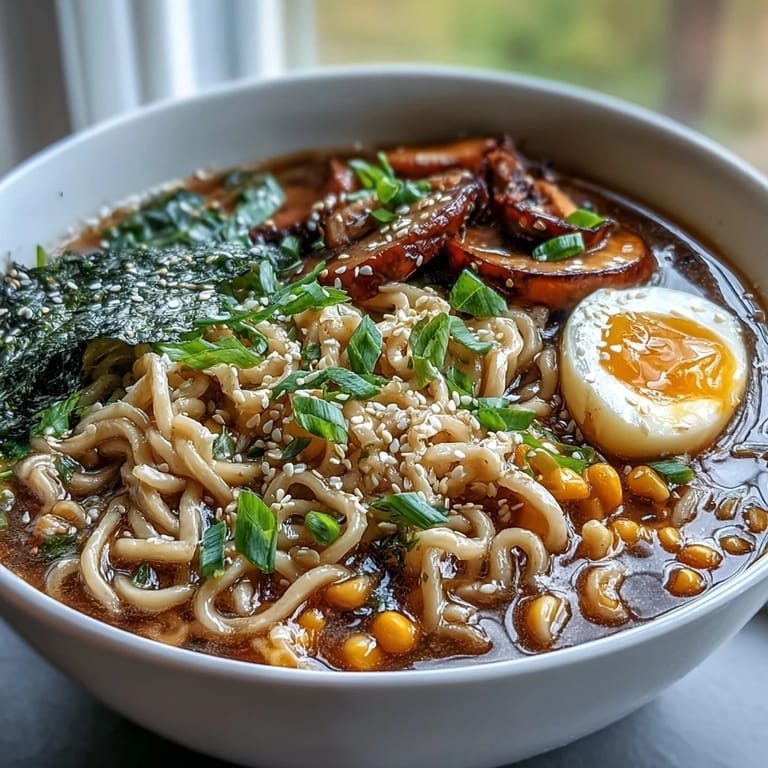
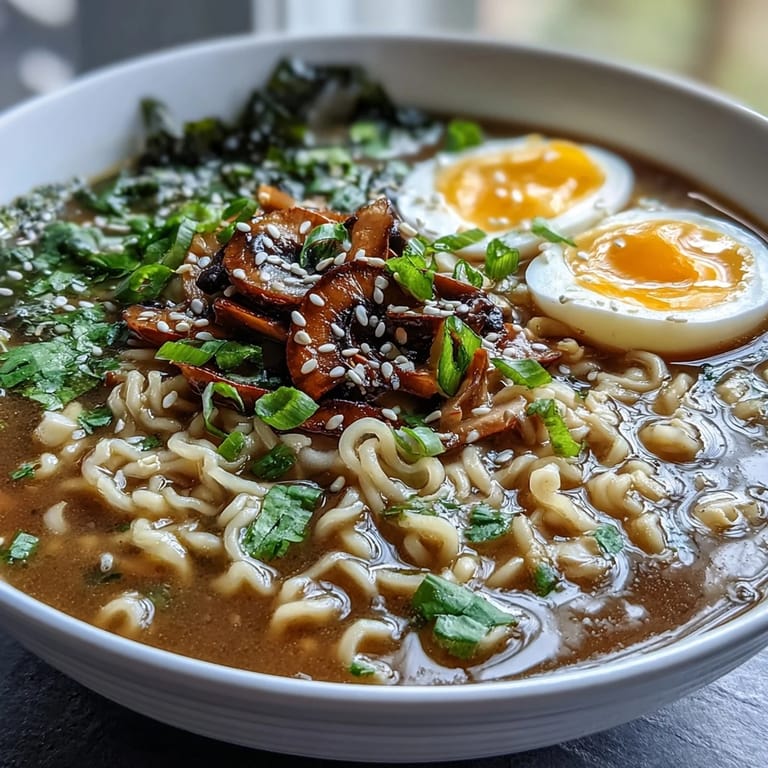
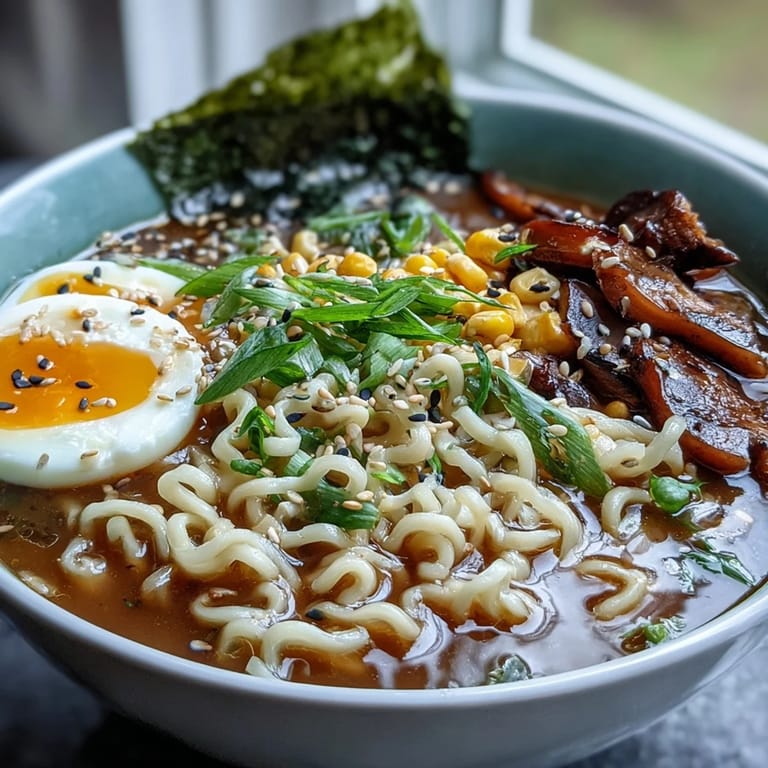
- Pile on mushrooms, spinach, corn, halved eggs, a scatter of green onions, nori ribbons, and a shower of toasted sesame seeds, and serve while everything is piping hot.
 Save to Pinterest
 There was a night when someone slurped their first spoonful, closed their eyes, and just grinned—a quiet, lovely pause before conversation resumed and bowls were happily wiped clean. It struck me then how a humble bowl of ramen, layered with care, could spark such visible comfort and contentment around the table.
What Makes a Bowl of Ramen Extra Special
For me, the best bowls always come together when you&39;ve prepped all your toppings ahead—egg peeled, mushrooms sliced, nori snipped—so each element gets the attention it deserves in those final minutes. When you arrange every component lovingly, it transforms a simple dinner into an experience. Letting everyone customize their toppings has a way of turning ramen night into something interactive and memorable. Serving it the moment it&39;s ready means the broth is steaming, the noodles still springy, and the toppings at peak freshness. Sharing the act of assembling is easily half the fun.
Getting Your Broth Just Right
Broth is everything: a few extra minutes of gentle simmering can coax deeper flavors from the simplest ingredients. Taste at every stage, because even a dash more soy sauce or pinch of chili changes everything. If your broth feels flat, I sometimes toss in the mushroom stems or an extra garlic clove while it simmers and fish them out before serving. That&39;s the beauty of homemade—you can build layers until you&39;re happy with every spoonful. In time, you&39;ll be able to tell it&39;s ready by the aroma alone.
Tackling the Tricky Parts With Confidence
If you&39;re worried about soft-boiled eggs or timing noodles just right, remember: every ramen chef has fumbled both at least once! I finally bought a little kitchen timer I now use just for eggs, and it made every batch perfect. Cooking noodles separately means you avoid gummy results, even if the kitchen gets bustling. I always set out all the toppings within easy reach, so nothing gets forgotten as bowls are built.
- Slice spinach and mushrooms before you start—everything moves fast at the end.
- Taste your broth every time, not just the first try.
- Go easy on the chili paste at first—it&39;s easier to add heat than to take it away.
 Save to Pinterest
 May each bowl of homemade ramen you make bring you the same warmth, comfort, and laughter as it has in my kitchen. There&39;s no right or wrong here—just enjoy the ritual and the reward.
Ask About This Recipe
- → How do I prevent miso from clumping?
Whisk the miso with a ladleful of hot broth in a small bowl until smooth before stirring it into the pot. Avoid boiling the soup vigorously after adding miso to preserve texture and flavor.
- → What’s the best way to get jammy soft-boiled eggs?
Bring water to a gentle boil, lower eggs in, and simmer for 7 minutes. Transfer to an ice bath immediately, cool completely, then peel to keep yolks soft and glossy.
- → Can I make this vegetarian or vegan?
Yes. Use low-sodium vegetable broth, omit eggs, and choose plant-based noodles or add silken or fried tofu for protein. Ensure miso and soy sauce labels fit your diet preferences.
- → Which noodles work best for this bowl?
Fresh ramen noodles provide the classic texture, but dried ramen works well too—cook according to package timing. For a chewier bite, try thick wheat noodles; adjust cooking time to avoid sogginess.
- → How should I store and reheat leftovers?
Store broth separately from noodles and toppings. Reheat broth gently on the stove to avoid over-reducing it, then add noodles and toppings just before serving to preserve texture.
- → How can I adjust spice and salt levels safely?
Add chili paste gradually to increase heat. Balance saltiness by adjusting soy sauce or miso incrementally and tasting as you go; add water or extra broth if it becomes too salty.