 Save to Pinterest
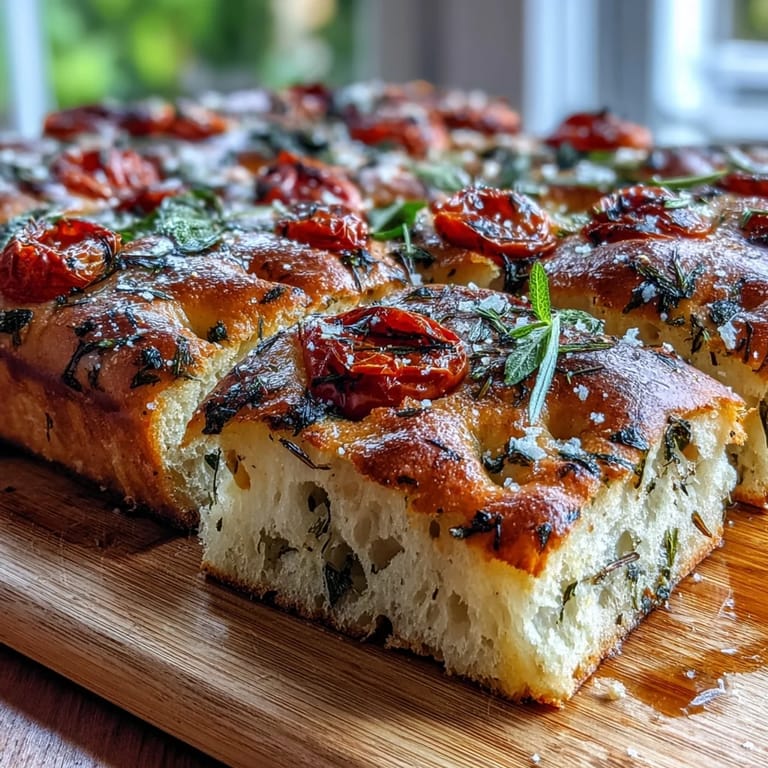
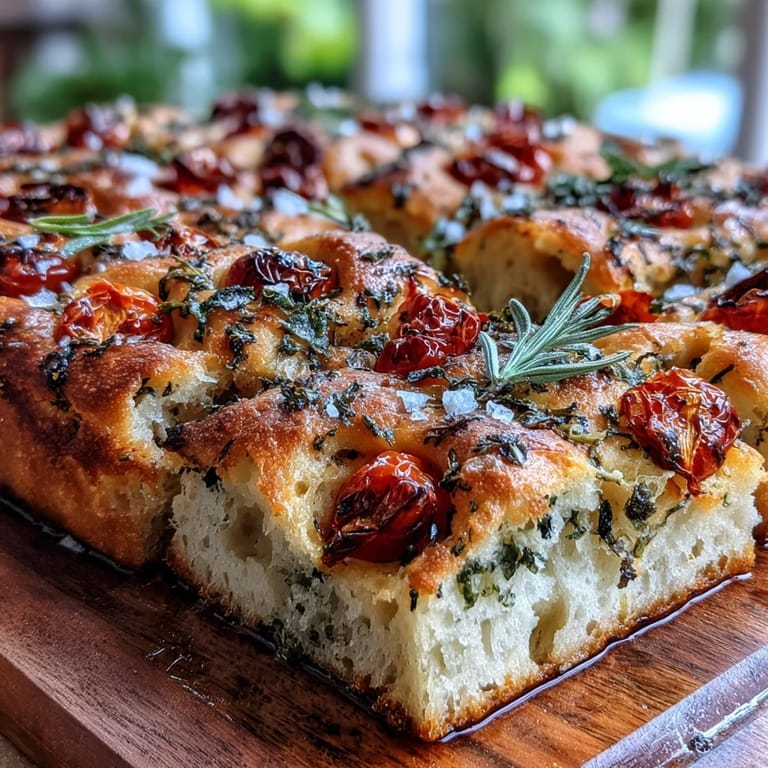
 One breezy afternoon when the air was thick with the scent of freshly mown grass, I found myself itching to bake something that tasted as lively as the season itself. Spring Herb Focaccia always feels like an edible garden, weaving together the brightness of just-picked herbs and plump cherry tomatoes. The satisfying sound of fingertips dimpling dough has become a small joy in my kitchen. Every batch smells different depending on what’s sprouting in the window box. If the light’s just right, baking this bread can make even a weekday feel like a celebration.
Once, I whipped up this focaccia while friends gathered in the garden, trading stories over glasses of crisp white wine. As it baked, the scent of rosemary and yeast drifted out the open kitchen window, drawing everyone inside before I could call them. There was laughter as warm slices disappeared straight off the cooling rack. No one even waited for plates. The bread vanished nearly as quickly as it cooled.
Ingredients
- Bread flour: Provides the chewy, airy crumb—using a high-protein flour here will help your focaccia rise beautifully.
- Fine sea salt: Blends seamlessly into the dough and brings out the flavors of both bread and toppings; don’t substitute with table salt unless you adjust the quantity.
- Active dry yeast: Reliable lift with a five-minute bloom in water—make sure your yeast is fresh for good rise.
- Lukewarm water: Not hot, not cold—just warm enough to activate the yeast without killing it; check with a fingertip for barely-there warmth.
- Extra-virgin olive oil: Adds depth and moistness; don’t be shy about generously oiling both bowl and tray for that signature golden crust.
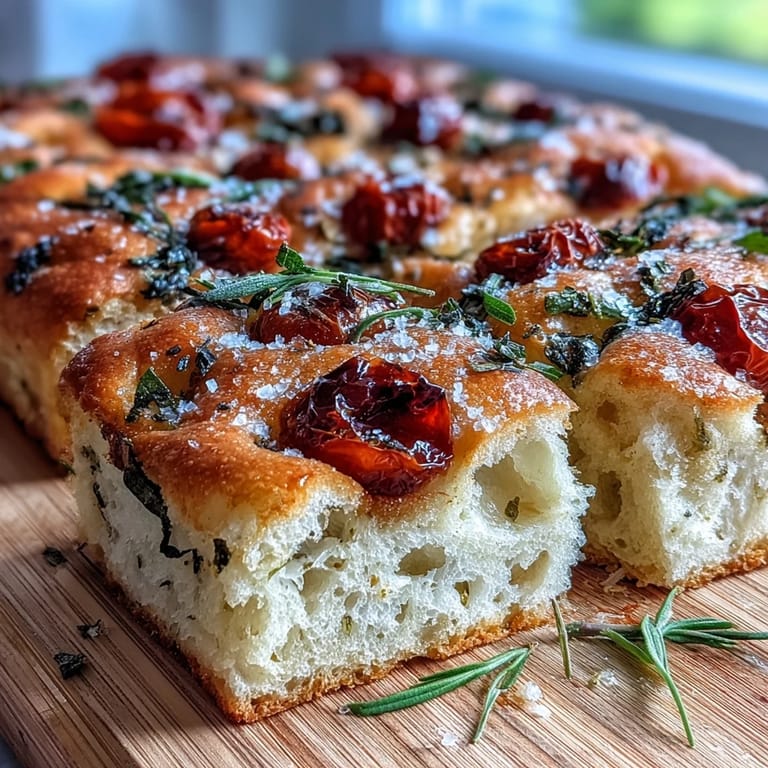
- Cherry tomatoes: Their juice caramelizes in the oven, creating little pockets of sweetness on every slice.
- Fresh rosemary, thyme, chives, and basil: These add layers of aroma and flavor—always use fresh if you can, and don’t over-chop the basil so it keeps a bit of texture.
- Flaky sea salt: That final sprinkle makes every bite sing; it’s worth seeking out for those pops of crunch.
- Freshly ground black pepper: A simple twist just before baking adds warmth without overpowering the delicate herbs.
Tired of Takeout? 🥡
Get 10 meals you can make faster than delivery arrives. Seriously.
One email. No spam. Unsubscribe anytime.
Instructions
- Mix the dry ingredients:
- In your largest mixing bowl, whisk together bread flour and fine salt, letting the grains run through your fingers.
- Activate the yeast:
- Add the active dry yeast to lukewarm water in a small bowl, waiting for a creamy foam to form—if nothing happens, the yeast might be old.
- Combine and form the dough:
- Pour yeast mixture and olive oil into the flour, stirring with a wooden spoon until you have a shaggy, sticky dough that clings as you scrape the sides.
- First rise:
- Coat a clean bowl with olive oil, transferring in the dough; cover tightly with a damp towel and let it rest somewhere warm until doubled and pillowy, about 1–1.5 hours.
- Shape and dimple the dough:
- Generously oil a 9x13-inch baking tray, then gently stretch and press the dough to fill the corners, dimpling deeply with your fingertips and feeling the bubbles move just beneath the surface.
- Second rise:
- Cover again with a towel, letting the dough puff up for another 30–40 minutes—it will relax and fill the tray a bit more.
- Preheat the oven:
- Heat to 220°C (425°F) so your oven’s roaring and ready for a quick rise and golden crust.
- Add toppings:
- Drizzle olive oil over the top, scatter halves of cherry tomatoes, all the fresh herbs, plenty of flaky salt, and finish with black pepper; let it look as wild or as neat as you like.
- Bake:
- Slide into the hot oven and bake for 22–25 minutes; you’ll know it’s ready when the edges turn crisp and the top blisters with color.
- Cool and serve:
- Allow the focaccia to cool just until it can be handled, then slice it warm and enjoy, or let it come to room temperature for easy sharing.
 Save to Pinterest
  Save to Pinterest
 There was an afternoon when my niece pressed her tiny thumb into the dough beside mine, giggling as olive oil squelched between our fingers. That little moment made this focaccia so much more than another loaf—it felt like spring captured in bread, with laughter baked right in. The kitchen light was golden and the house was filled with a sense of abundance. That loaf didn’t even last long enough to fully cool. Sometimes, baking is less about perfection and more about shared delight.
The Secret to Beautiful Dimples
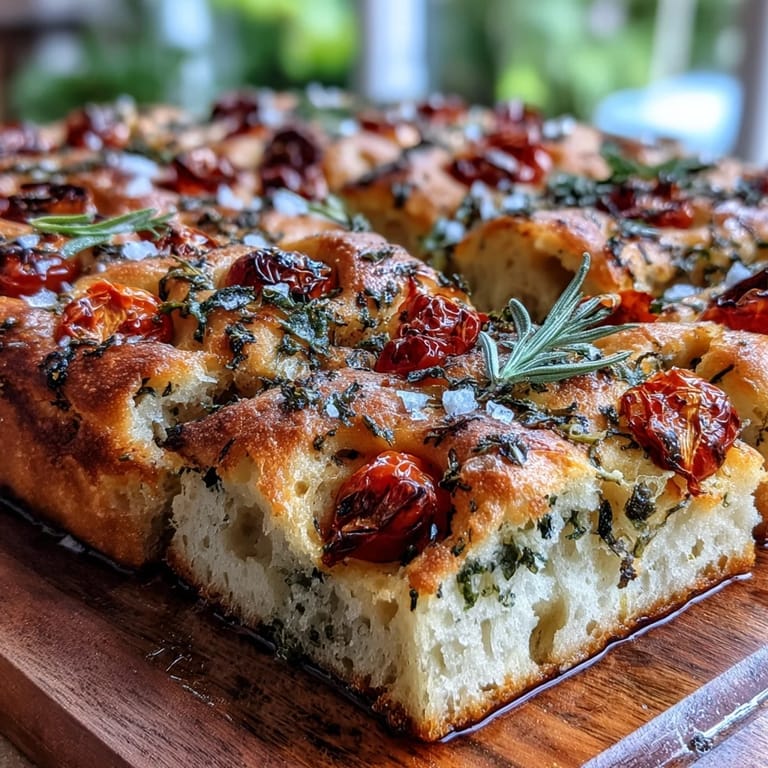
If the dough sticks to your hands like marshmallow, drizzle on a little more olive oil before dimpling—it’ll keep things light and airy, not compacted. Don’t be afraid to get your hands messy and really poke down to the tray; this creates those signature pockets for pooling oil and flavor. I’ve found my dimples are best when I press quickly but gently, instead of hesitating. Boxing the edges in with your palm keeps the dough evenly spread. Kids love this part because it’s basically sanctioned, grown-up-approved poking.
Swapping & Adding Spring Herbs
Some of my most delicious focaccias happened when I threw in extra soft herbs I had lying around, like dill or tarragon. Their fragrances mingle especially well with the sweet tomatoes and golden dough. Try to use what’s fresh and tender—parlsey, chervil, or snipped green onion tops give great results. If using woody herbs, keep the pieces small for even baking. Let your nose and the season guide you.
Serving Ideas and Leftover Love
The focaccia is unbeatable warm from the oven with peppery olive oil, but leftovers make an extraordinary sandwich base or panzanella salad. If you manage to have some left, wrap it in parchment and briefly warm it in the oven to revive that just-baked magic. Once, I repurposed extra slices into a grilled cheese, and nobody guessed it started as day-old bread.
- If your kitchen is chilly, let the dough rise in the oven with just the light on.
- Cut before serving for crisp edges on every piece.
- Don’t skimp on the olive oil—the crust is what everyone remembers.
 Save to Pinterest
  Save to Pinterest
 Spring Herb Focaccia never fails to bring a touch of sunshine and generosity to the table. However you customize it, I hope it sparks a few happy kitchen memories of your own.
Ask About This Recipe
- → How do I achieve a light, airy crumb?
Use a strong bread flour and allow two proper rises: 1–1.5 hours for the initial proof and 30–40 minutes after shaping. Handle the dough gently to retain gas and dimpling with oiled fingers encourages even oven spring.
- → Can I swap instant yeast for active dry yeast?
Yes. If using instant yeast, reduce the proofing time slightly and add it directly to the dry flour. Active dry yeast should be dissolved in lukewarm water and proofed until foamy before mixing.
- → How do I prevent the tomatoes from making the surface soggy?
Use halved cherry tomatoes and press them lightly into the dough so juices release into pockets rather than pooling. Patting the tomato halves dry and scattering them just before baking also helps limit excess moisture.
- → What herb substitutes work well?
Swap or combine any tender spring herbs such as parsley, dill, tarragon or oregano. Robust herbs like rosemary and thyme can be used sparingly to avoid overpowering the crumb.
- → How should I store and reheat leftovers?
Store cooled focaccia in an airtight container at room temperature for up to 2 days or in the fridge for 3–4 days. Reheat in a 180°C (350°F) oven for 8–10 minutes to crisp the crust and revive the crumb.
- → Can I add cheese to the dough or on top?
Yes. Mixing grated Parmesan into the dough or sprinkling it on top before baking adds savory depth. Add modestly to preserve the light texture and balance with the herbs and tomatoes.