 Save to Pinterest
 I'll never forget the first time I encountered a noodle board at a small restaurant in Bangkok. The server set down this gorgeous platter, and I remember thinking it was almost too beautiful to eat. Every vegetable was sliced into perfect ribbons, the proteins were arranged like an artist's palette, and there were these little bowls of sauce scattered around. That moment sparked something in me—the realization that Asian cuisine is as much about the visual experience as it is about taste. Now, whenever I want to create that same sense of wonder in my own kitchen, I build this noodle board. It's become my favorite way to entertain, because it lets everyone become the artist of their own meal.
I made this for my sister's birthday dinner last spring, and what struck me most wasn't the compliments on the food itself, but how everyone lingered at the table, mixing and matching flavors, telling stories. My nephew, who normally rushes through meals, spent twenty minutes carefully choosing which vegetables to pair with each sauce. That's when I understood—this board isn't just about noodles and vegetables. It's an edible conversation, a way of saying you care enough to let people enjoy food on their own terms.
Ingredients
- 300 g rice noodles or soba noodles: Rice noodles give a delicate, tender bite that absorbs sauce beautifully, while soba brings a subtle nutty flavor and firmer texture. I've learned that soaking them briefly in cool water after cooking keeps them from clumping, and tossing with sesame oil is the secret trick that prevents them from sticking together on the board
- 1 tbsp sesame oil: This isn't just a coating—it's the difference between noodles that slide apart elegantly and ones that clump into a tangled mess. The aroma is also the first hint guests get that something special is coming
- 200 g cooked chicken breast, thinly sliced: I slice it against the grain so each bite is tender. For vegetarians, firm tofu pressed and pan-fried until it has a slight crust works beautifully
- 150 g cooked shrimp, peeled and deveined: The sweetness of shrimp balances the umami of the sauces. If shrimp isn't available, more chicken or crispy chickpeas work just as well
- 2 boiled eggs, halved: They add richness and visual appeal. I boil them the day before so the yolks stay creamy and perfectly centered
- 1 cup julienned carrots: The natural sweetness and bright orange color are essential to the board's visual balance. A mandoline makes this effortless
- 1 cup cucumber, thinly sliced: This brings cool crispness that cuts through rich sauces. Slice it just before serving to keep it crisp
- 1 red bell pepper, julienned: The sweetness and crunch add textural contrast. I've found that slicing it lengthwise creates more elegant pieces
- 1 cup red cabbage, thinly sliced: It stays crisp for hours and its slight bitterness keeps the board from feeling too sweet
- 1 cup edamame, cooked and shelled: Beyond just being nutritious, they're small pops of protein and a familiar touch that makes the board feel approachable
- 4 radishes, thinly sliced: Their peppery bite surprised me the first time I added them, but now they're non-negotiable. They wake up your palate between bites
- 2 scallions, sliced: The mild onion flavor and gentle allium kick tie all the flavors together
- 1/4 cup fresh cilantro leaves: I always choose the tender leaves from the top of the bunch for a more delicate flavor
- 1/4 cup fresh mint leaves: It adds unexpected brightness and a cooling sensation that's especially refreshing
- 1/4 cup roasted peanuts, chopped: Toast them yourself if you can—the fragrance that fills your kitchen is worth it alone
- 2 tbsp toasted sesame seeds: They add a subtle crunch and nutty depth. Keep them separate until serving so they don't absorb moisture
- Lime wedges: The acidity is the final piece that brings everything into focus
- 1/3 cup soy sauce: The classic umami anchor. Use tamari if serving anyone who's gluten-sensitive
- 1/3 cup spicy peanut sauce: The heat should build gently, not overwhelm. If store-bought, choose one with recognizable ingredients
- 1/3 cup hoisin sauce: Its subtle sweetness balances saltier components. A little goes a long way
- 1/3 cup sweet chili sauce: This is the bridge flavor that makes everything feel cohesive and slightly sweet
Tired of Takeout? 🥡
Get 10 meals you can make faster than delivery arrives. Seriously.
One email. No spam. Unsubscribe anytime.
Instructions
- Cook and cool the noodles:
- Bring a large pot of water to a rolling boil and cook your noodles according to the package instructions—usually about 4 minutes for rice noodles. You'll know they're ready when they're tender but still have a tiny bit of resistance when you bite one. Drain them into a colander and run cold water over them while gently separating them with your fingers. This stops the cooking immediately and prevents mushiness. Drizzle with sesame oil and toss gently until each strand is coated. Let them cool completely on a clean kitchen towel—this prevents them from becoming gluey when arranged on the board.
- Prep all vegetables with intention:
- This is where the beauty happens. Slice everything as you go, and I mean really take your time with this. A sharp knife makes all the difference—dull knives tear vegetables and rob them of their crispness. As you slice, arrange each ingredient on a separate small plate or in a small bowl. This keeps flavors separate and makes the final arrangement so much easier. The process itself is meditative; there's something grounding about creating order from raw ingredients.
- Arrange the protein:
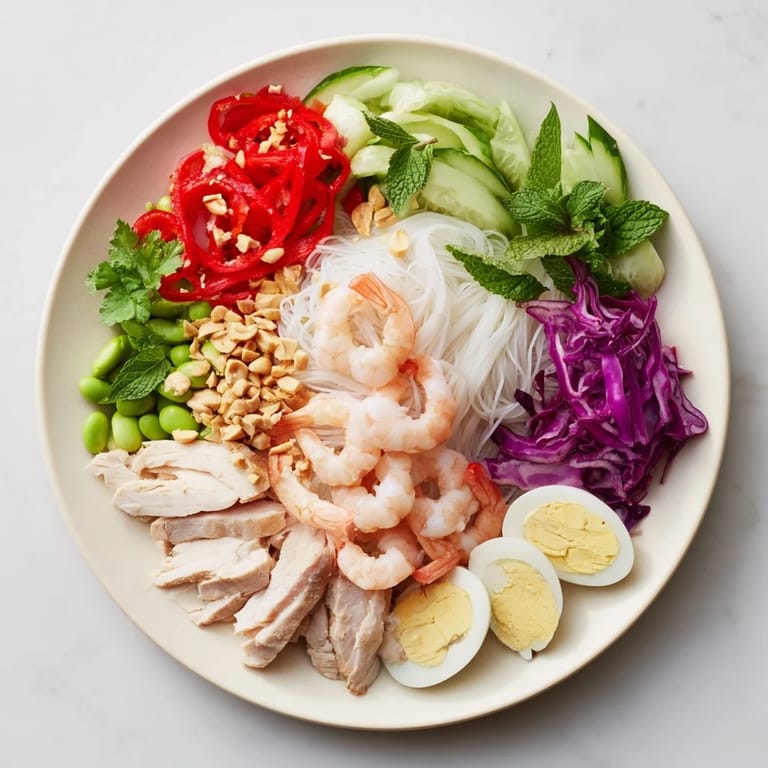
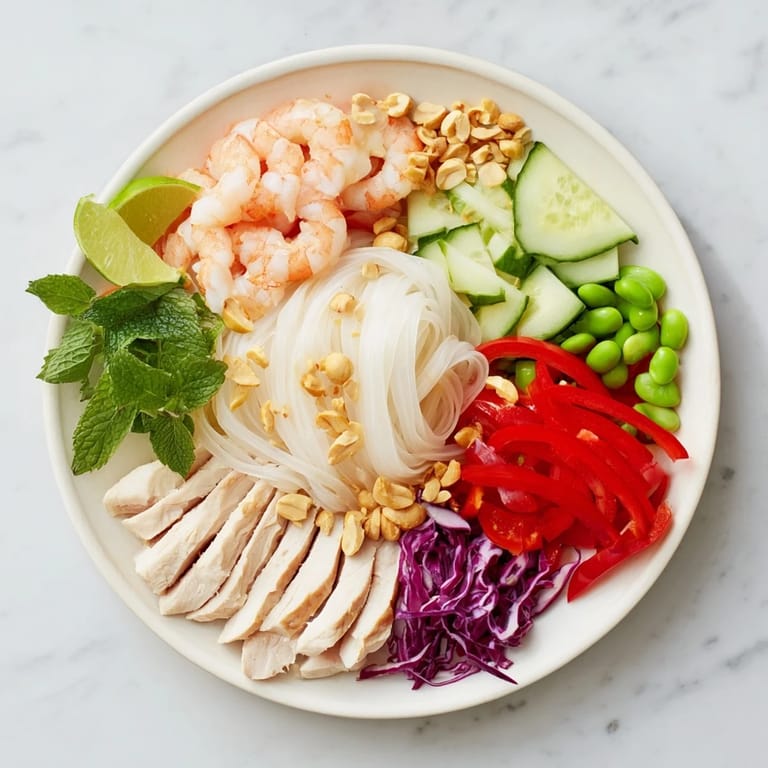
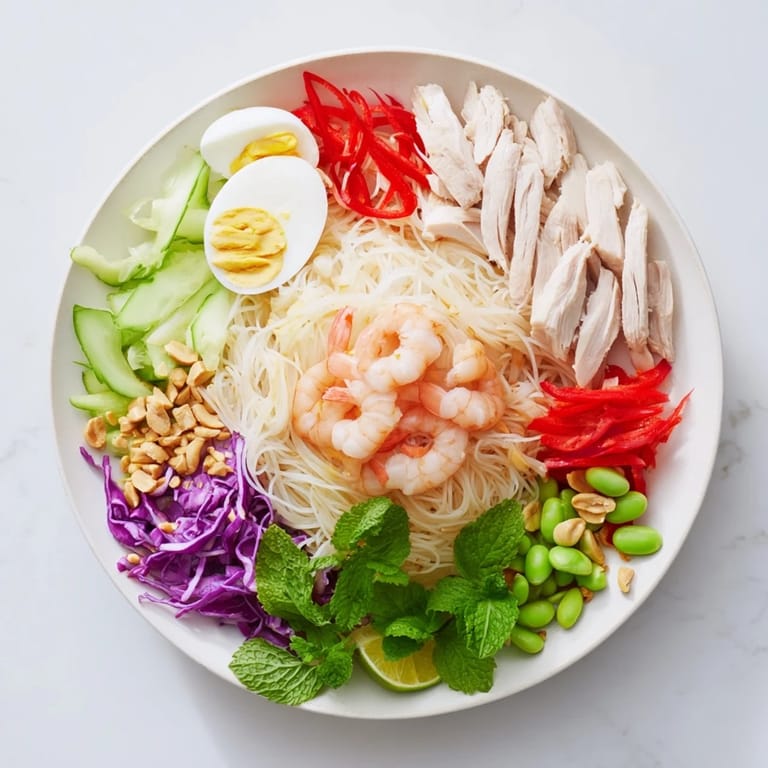
- Slice the cooled chicken against the grain into pieces about 1/4 inch thick. Pat the shrimp dry so they don't make the board wet. Halve the boiled eggs and arrange them cut-side up so you can see those beautiful yolks. Now comes the fun part—find your large board or platter. I use a wooden one because it feels warm and inviting, but any large, shallow surface works. Leave the center clear for your sauce bowl. Create distinct sections for each protein, stacking them neatly or fanning them slightly. They're not just ingredients now—they're design elements.
- Create a beautiful vegetable landscape:
- Start filling in the spaces around the proteins with vegetables. I like to arrange them in neat rows or fans, so each vegetable is distinct but everything feels connected. The julienned carrots and peppers create natural lines. Let the cucumber slices overlap slightly like roof tiles. Stack the radish slices, fan the cabbage ribbons. Don't worry about perfection—Asian aesthetics actually celebrate asymmetry. What matters is that the colors balance and there's a sense of intentional arrangement. Step back occasionally and look at it from above. You're creating something that's as much a painting as it is a meal.
- Position the sauce bowl strategically:
- Place your divided sauce bowl or four small bowls in the center of your board. If you're using a divided bowl, fill each section with a different sauce—the colors themselves will be gorgeous. The soy sauce is dark and deep, the peanut sauce is warm brown, the hoisin is rich reddish-brown, and the sweet chili sauce is bright red-orange. If they're individual bowls, nestle them together in the center. This becomes the anchor point that pulls the whole composition together.
- Scatter the finishing touches:
- Fill any remaining gaps with the cooked noodles, creating little nests or piles. Scatter the cilantro and mint over everything with a generous hand—the green brings life. Sprinkle the chopped peanuts and sesame seeds just before serving so they stay crunchy. Tuck lime wedges into empty spaces. Now step back. You've created something that looks almost too beautiful to eat, but trust me—everyone will want to dive in.
- Final presentation:
- Serve the board at the table and let everyone watch it come together in the room. There's something magical about that moment when people see it for the first time. Have small plates ready, and maybe small bowls or cups for sauce. Encourage people to mix and match, to try unexpected combinations. The beauty of this dish is that there's no wrong way to eat it.
 Save to Pinterest
 What I treasure most about this dish is watching people who don't usually know each other find common ground at the table. My neighbor, who's quite reserved, became animated when she discovered the perfect ratio of mint to cilantro to chili sauce. That's when I realized this board does something special—it transforms strangers into collaborators, each one discovering their own perfect flavor combination. Food has never felt more like connection than it does with this dish.
Selecting Your Proteins
The beauty of this board is its flexibility with protein. Chicken and shrimp are the classics I reach for, but I've had tremendous success with other combinations. Pan-seared tofu pressed until crispy has converted more than one skeptic. Thinly sliced steak works wonderfully if you want something more indulgent. I've even used crispy chickpeas or marinated seitan for vegetarian versions that feel just as satisfying. The key is having something with substance that can stand up to the bold flavors of the sauces. Think about what your guests love, and build from there. Hard-boiled eggs are always my safety net—they're satisfying, add richness, and appeal to almost everyone.
Timing and Preparation Strategy
The secret to pulling this off without stress is understanding that you can do most of the work hours ahead. I like to prep vegetables in the morning and store them in separate containers in the refrigerator. The noodles can be cooked, dressed, and left to cool hours before serving. Even the proteins can be prepared the day before. What you absolutely must do last is assemble the board and scatter the fresh herbs and sesame seeds. Those final 15 minutes are when everything comes alive. The first time I made this, I tried doing everything in advance, thinking I'd be so clever. The noodles got gluey, the vegetables released their water, and the whole thing looked tired by dinnertime. Now I think of it as: prep everything, rest everything, then wake it up with final assembly. It's also nice to involve someone in the final arrangement—it builds anticipation and makes people feel invested in what they're about to eat.
Sauce Philosophy and Customization
The four sauces aren't just condiments—they're the narrative of this dish. Each one tells a different flavor story, and letting people choose creates agency in their eating experience. I've learned that the quantity of sauce matters enormously. Too little and people run out before they've tried everything; too much and flavors become muddled. I usually start with the quantities listed and let people ask for more if they want it. I've also discovered that combining sauces creates magic—a little soy with a dab of peanut sauce, or chili sauce stirred into hoisin, opens up entirely new flavor dimensions. For those with gluten sensitivities, simply use tamari instead of soy sauce, and verify that your store-bought sauces are certified gluten-free. The beauty is that even with substitutions, the experience remains special.
- Make your own peanut sauce if you have even 10 minutes—ground peanuts, lime juice, soy sauce, and a touch of honey create something that store-bought versions struggle to match
- Test all sauces for heat level before serving, especially if you have guests with varying spice tolerances. You can always add heat, but you can't take it away
- Keep extra sauce on hand. People are always more generous with sauce than you'd predict, and running out midway through dinner feels like a failure
 Save to Pinterest
 Every time I bring this board to the table, I'm reminded that cooking isn't just about feeding people—it's about creating moments. This dish has a way of bringing out the best in gatherings, turning a simple meal into an experience everyone remembers.
Ask About This Recipe
- → What type of noodles work best for this platter?
Rice noodles or soba noodles are ideal as they hold sauces well and provide a tender texture that complements the fresh vegetables and proteins.
- → Can I substitute the proteins for vegetarian options?
Yes, firm tofu can replace chicken and shrimp, making the dish fully vegetarian without compromising flavor or texture.
- → How should the vegetables be prepared for the best presentation?
Julienne or thinly slice vegetables like carrots, cucumber, bell pepper, and red cabbage to create a colorful and visually balanced arrangement on the board.
- → What dipping sauces are included and how should they be served?
Soy sauce, spicy peanut sauce, hoisin, and sweet chili sauces are served in a divided central bowl so each section offers a distinct flavor to complement the components.
- → How can I adapt the dish for gluten-free diets?
Use tamari instead of soy sauce and verify all dipping sauces are gluten-free to safely accommodate gluten-sensitive diners.
- → What garnish options enhance both flavor and presentation?
Fresh cilantro, mint leaves, roasted peanuts, toasted sesame seeds, and lime wedges add bright, crunchy, and aromatic notes to this dish.