 Save to Pinterest
 There's something about watching egg whites transform into glossy peaks that still feels like kitchen magic, even after making these countless times. My neighbor brought mini pavlovas to a summer potluck years ago, and I spent half the evening asking how she'd managed something so elegant yet somehow effortless. She smiled and said the secret was patience and clean bowls, which sounded mysterious at the time. Now I understand what she meant, and I make these whenever I want to feel like I've pulled off something special without spending all day in the kitchen.
I made these for my daughter's birthday brunch last spring, and what stuck with me wasn't the compliments (though there were plenty) but rather watching her friend dare to pick one up, unsure if it would shatter. That first tentative bite, the way the crisp exterior gave way to airy sweetness followed by cold cream and bright strawberries—her whole face changed. That's when I realized these weren't just dessert; they were a small moment of genuine joy on a plate.
Ingredients
- Egg whites (4 large, room temperature): Cold eggs won't whip properly, so pull them from the fridge about 30 minutes ahead; I learned this the hard way after wondering why mine weren't cooperating one frustrated afternoon.
- Superfine sugar (1 cup/200 g): Regular granulated sugar works in a pinch, but superfine dissolves more completely into the meringue, giving you that signature glossy finish without grittiness.
- Cornstarch (1 teaspoon): This tiny addition keeps the center slightly chewy while the exterior stays crisp, creating that perfect textural contrast.
- White vinegar (1 teaspoon): It stabilizes the meringue and helps it hold its shape during the long, slow bake without adding any sour taste.
- Vanilla extract (1 teaspoon for meringue): Use pure vanilla if you have it; the flavor difference is noticeable when something this delicate is the star.
- Heavy whipping cream (1 cup/240 ml, cold): Keep it cold right up until beating, and don't overwhip or you'll end up with butter instead of cream—stop when you see soft peaks forming.
- Powdered sugar (2 tablespoons): This dissolves instantly into cream without needing extra beating, so you avoid overworking it.
- Fresh strawberries (1½ cups/225 g, hulled and sliced): Choose ripe but still firm berries; macerate them with sugar and lemon juice to draw out their juice and deepen their flavor.
Tired of Takeout? 🥡
Get 10 meals you can make faster than delivery arrives. Seriously.
One email. No spam. Unsubscribe anytime.
Instructions
- Get everything ready:
- Preheat your oven to 250°F and line a baking sheet with parchment paper. Make sure your bowl and mixer beaters are completely dry and grease-free, since even a tiny drop of yolk or oil will prevent the whites from reaching full volume.
- Whip the egg whites:
- Beat them on medium speed until soft peaks form, watching as they go from clear and foamy to opaque and pillowy. This takes about 3 to 4 minutes, and you'll actually hear the pitch of the mixer change.
- Add sugar gradually:
- Sprinkle in about 1 tablespoon at a time while the mixer keeps running, then wait a few seconds between additions so it fully incorporates. This slow approach prevents the mixture from deflating and ensures the sugar dissolves completely, rather than leaving a gritty texture.
- Reach stiff peaks:
- Keep beating until the meringue is glossy and forms stiff peaks that stand straight up when you lift the beaters. You'll know it's ready when you could turn the bowl upside down and nothing would move.
- Fold in the secret ingredients:
- Gently fold in the cornstarch, vinegar, and vanilla using a spatula, turning the mixture carefully to avoid deflating all that air you just worked for. This should take maybe 30 seconds of slow, deliberate folding.
- Shape the nests:
- Spoon the meringue into 6 mounds on your parchment paper, or use a piping bag if you want them more uniform. Use the back of a spoon to create a shallow well in the center of each one, where the cream and berries will eventually sit.
- Bake low and slow:
- Slide them into the oven for 1 hour at that gentle 250°F temperature. The goal is to dry them out rather than brown them, so they should stay mostly white or just barely cream-colored.
- Cool completely:
- Turn off the oven and crack the door open about 2 inches, then let everything sit inside for at least another hour. This gradual temperature drop prevents cracks and keeps them crisp all the way through.
- Macerate the strawberries:
- While the meringues cool, toss your sliced berries with a bit of granulated sugar and lemon juice, then let them sit for about 15 minutes. You'll see juice pool at the bottom of the bowl, which is exactly what you want.
- Whip the cream:
- In a fresh, cold bowl, beat the heavy cream with powdered sugar and vanilla until soft peaks form, which usually takes 1 to 2 minutes. Stop as soon as you see peaks; a few extra beats can turn it into butter.
- Assemble just before serving:
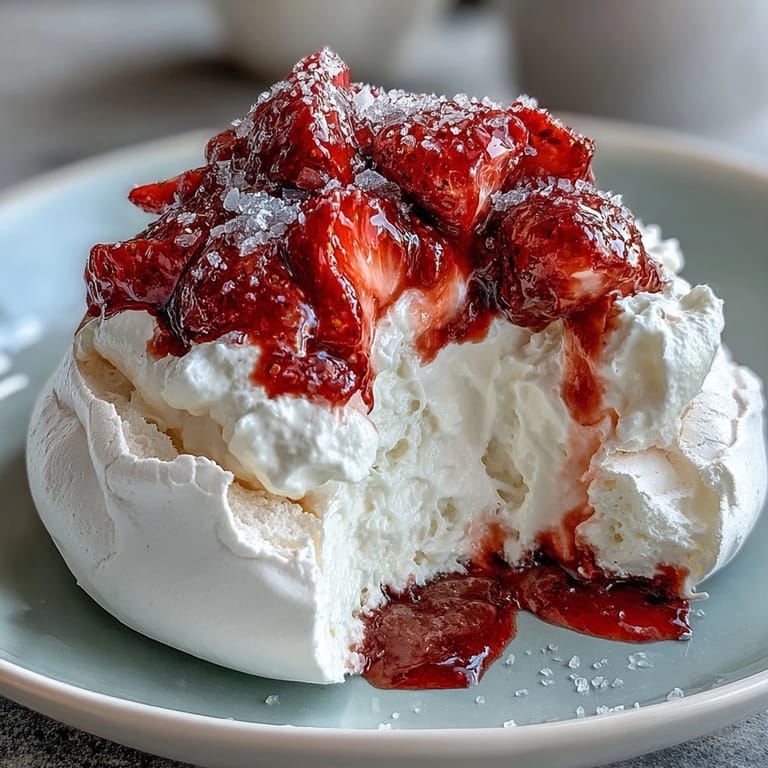
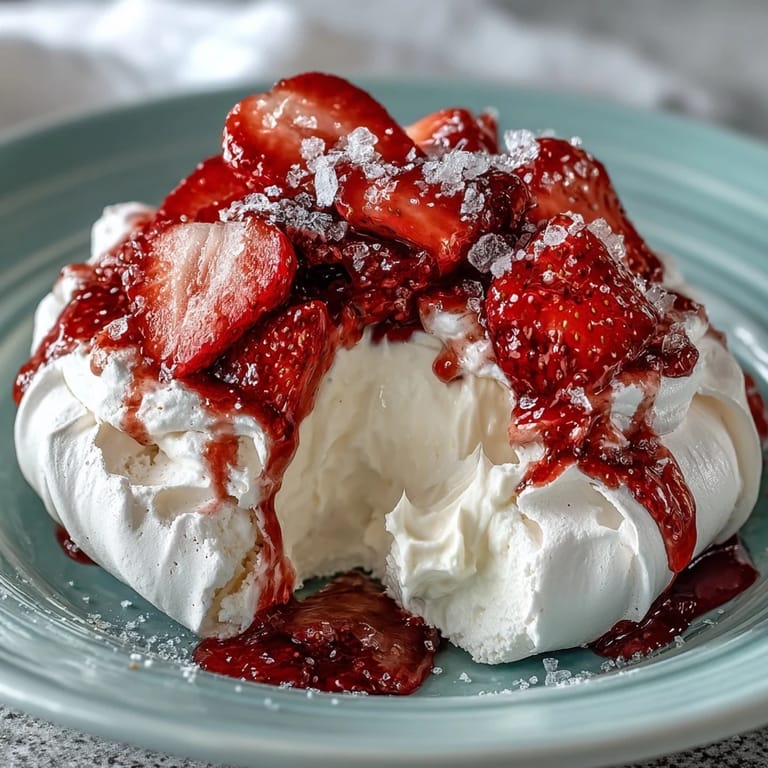
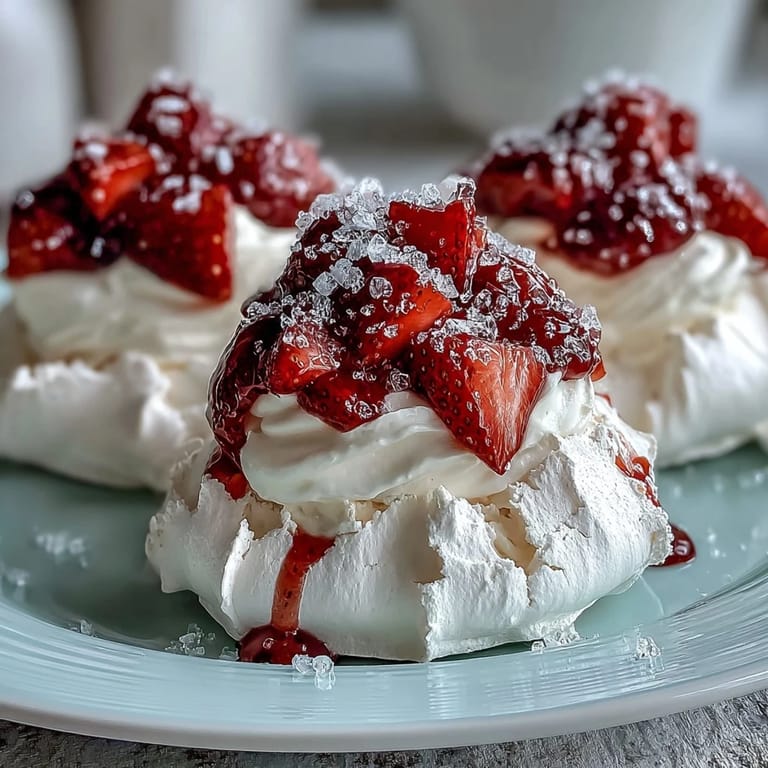
- Place each cooled meringue on a plate, fill the center with a generous dollop of whipped cream, then top with the strawberries and a spoonful of their juice. This is when they go from impressive to genuinely unforgettable.
 Save to Pinterest
 My mom once said that pavlovas are proof that the most elegant things often come from the simplest ingredients and the most patience. She was right, and somewhere in that lesson was also permission to stop overthinking dessert and just trust the process.
The Art of the Perfect Meringue
The transformation from clear liquid egg white to glossy peaks happens in stages, and each one matters. Soft peaks are floppy and curl over when you lift the beaters; medium peaks stand up but still have a slight wave at the top; stiff peaks stand completely straight. For pavlovas, you want stiff peaks where the meringue holds its shape firmly, but it should still look glossy and smooth, not grainy or clumpy. If it starts looking dry or separated, you've beaten it too long, and while it might still bake, the texture won't be quite as light.
Storage and Make-Ahead Magic
One of the greatest gifts of this recipe is that the hardest part—making and baking the meringue—can happen a full day before you need it. Store the cooled nests in an airtight container at room temperature, somewhere they won't get knocked around, and they'll stay crisp for up to 24 hours. Assemble everything right before serving, though, because the cream will soften the meringue over time and you'll lose that satisfying crack when you bite into it.
Variations and Flavor Riffs
These mini pavlovas are endlessly flexible once you understand the basic formula. I've filled them with passionfruit curd and a drizzle of the juice, made them with dark chocolate cream in winter, and even topped them with lemon zest and candied lemon slices when I was in a bright mood. The meringue base stays the same; it's the cream and topping that can shift with the season, your pantry, or whatever berries look good at the market.
- Try raspberry and rose water cream for something floral and refined.
- Swap the whipped cream for mascarpone mixed with honey and vanilla for an almost tiramisu-like richness.
- Layer the cream with a thin smear of jam before adding fresh fruit for extra flavor depth.
 Save to Pinterest
 These mini pavlovas are one of those rare desserts that genuinely feel special without requiring you to be a professional baker. Make them once, and you'll understand why my neighbor had that knowing smile.
Ask About This Recipe
- → How do I achieve stiff peaks for the meringue?
Beat egg whites at medium speed until soft peaks form, then gradually add sugar while continuing to beat until stiff, glossy peaks are achieved.
- → Can I use other fruits instead of strawberries?
Yes, fresh berries like raspberries, blueberries, or a mixed berry medley work well as toppings for these meringue nests.
- → Why is the oven turned off while the meringues cool?
Allowing the meringues to cool slowly inside the oven with the door ajar helps prevent cracks and maintains a crisp texture.
- → What is the purpose of cornstarch and vinegar in the meringue?
Cornstarch stabilizes the meringue structure, while vinegar helps to strengthen the egg whites for a better texture.
- → How should the whipped cream be prepared?
Whip cold heavy cream with powdered sugar and vanilla extract until soft peaks form for a light and fluffy topping.
- → Can these be made ahead of time?
The meringues can be baked and stored in an airtight container, but it's best to assemble with cream and fruit just before serving to keep them crisp.