 Save to Pinterest
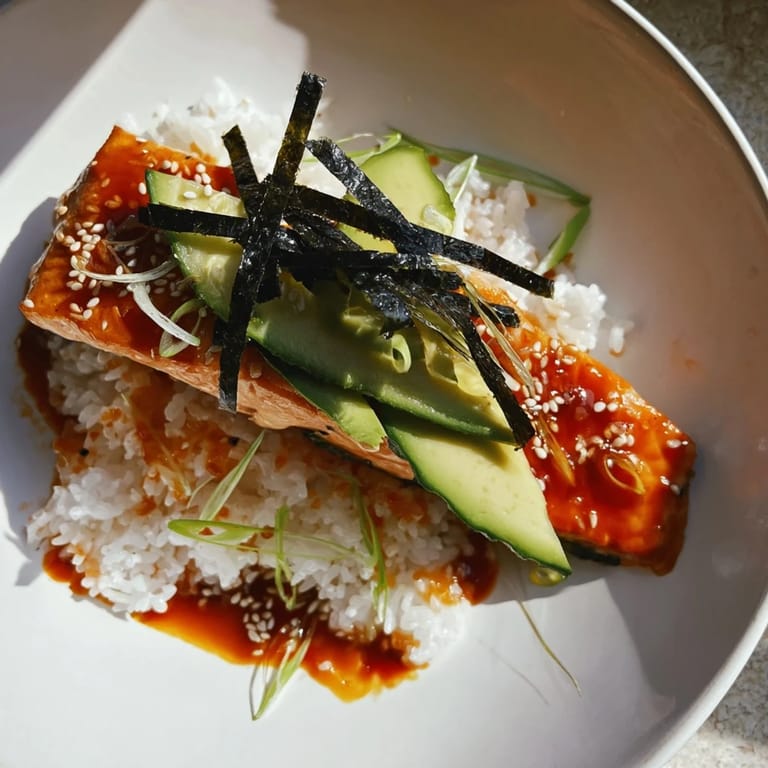
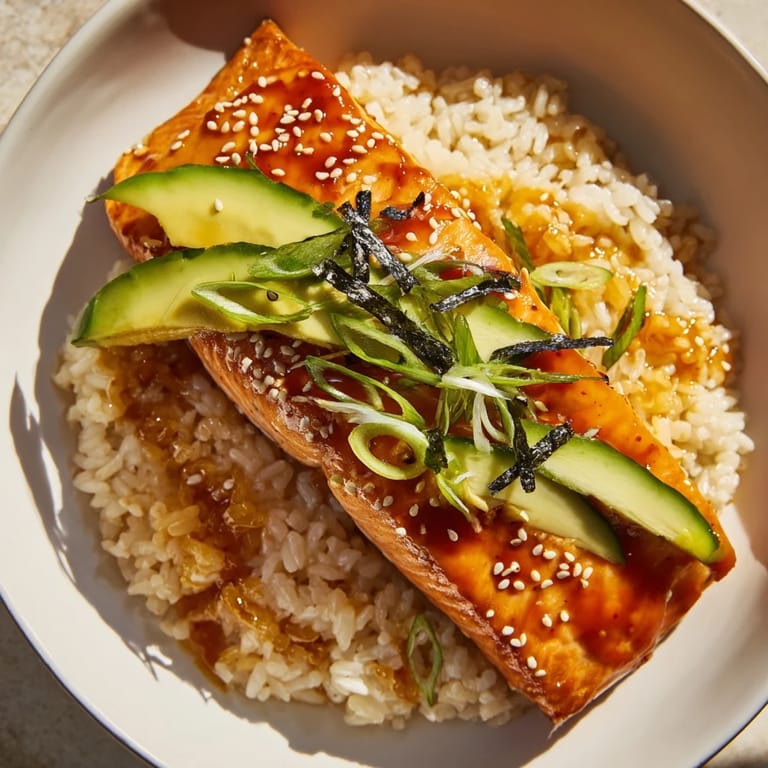
 There's something about the way salmon catches the light when it's glazed just right that made me fall hard for this bowl. I was scrolling through videos one evening, half-watching, when I saw someone brush that glossy orange-gochujang sauce onto salmon, and the sticky caramelization just mesmerized me. I knew I had to figure out how to make it taste as good as it looked, and after a few tries in my small kitchen, I finally nailed it. The first time my roommate tasted it, they actually stopped talking mid-bite, which is rare. Now it's become my go-to when I want something that feels fancy but takes barely longer than ordering takeout.
I made this for a friend who was going through a rough patch, and she showed up looking completely drained. The moment she took the first bite and that bright orange glaze hit her tongue, I watched her shoulders drop. We didn't talk much, just ate quietly together, and by the end of the bowl, she was smiling again. That's when I realized this dish does more than feed you—it lifts something in you.
Ingredients
- Salmon fillets: Look for ones that are firm to the touch and smell clean and oceanic, not fishy or ammonia-like.
- Gochujang: This fermented chili paste is the soul of the glaze; don't skip it or substitute it with regular hot sauce, the depth is entirely different.
- Freshly squeezed orange juice: The difference between fresh and bottled here is night and day—the brightness matters.
- Soy sauce: Use the regular kind, not low-sodium, because we want that deep savory backbone.
- Honey: Balances the heat and helps the glaze stick and caramelize on the salmon.
- Rice vinegar: Adds a subtle tang that rounds out the sweet and spicy.
- Toasted sesame oil: A little goes a long way; it's the final whisper of richness.
- Fresh ginger and garlic: Mince them fine so they distribute evenly through the glaze.
- Short-grain rice: Sushi rice or Japanese short-grain works best; it's stickier and catches the glaze better.
- Cucumber: Slice it thin so it stays crisp and cool against the warm, sticky salmon.
- Avocado: Cut it just before serving or it'll oxidize and turn sad looking.
- Nori: The roasted sheets have more flavor than unroasted; tear or cut them into strips.
- Toasted sesame seeds: They add nutty crunch and look beautiful scattered on top.
- Scallions: Slice them on a slight angle so they look intentional.
Tired of Takeout? 🥡
Get 10 meals you can make faster than delivery arrives. Seriously.
One email. No spam. Unsubscribe anytime.
Instructions
- Heat your oven and prep:
- Preheat to 200°C (400°F) and line your baking tray with parchment paper so the salmon doesn't stick and cleanup is instant.
- Season the salmon simply:
- Pat the fillets dry with a paper towel, then sprinkle both sides evenly with salt and pepper. The drier the surface, the better it will brown.
- Make the glaze:
- Whisk all glaze ingredients together in a bowl until you have a smooth, glossy sauce with no lumps. This should take about a minute of steady whisking.
- First brush and bake:
- Place salmon on the prepared tray, brush half the glaze on top, and bake for 12–14 minutes until the thickest part flakes gently with a fork. Don't overbake or it dries out.
- Prep your toppings while it bakes:
- Cook your rice if you haven't already, slice the cucumber, avocado, and scallions, and cut the nori into strips. Having everything ready means you can assemble immediately.
- Finish with a broil (optional but worth it):
- Once cooked, brush the remaining glaze on the salmon and run it under the broiler for 1–2 minutes until the glaze gets sticky and slightly caramelized. Watch it closely so it doesn't burn.
- Assemble with intention:
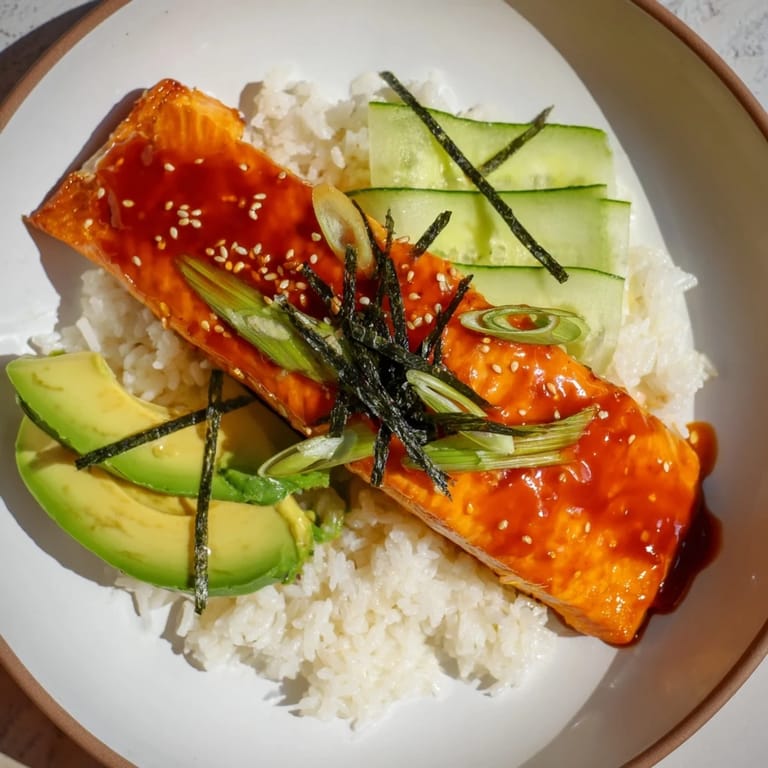
- Divide warm rice between bowls, top each with a salmon fillet, then arrange cucumber, avocado, and nori strips around it. Scatter sesame seeds and scallions over everything, then serve right away.
 Save to Pinterest
 There was this Tuesday night when I made this for myself after a long day, and I sat at my desk with the bowl cradled in my hands. The steam rising off the rice, the crunch of cucumber mixing with soft avocado, and that glaze making everything shine—I realized I'd stopped thinking about what was stressing me. That's the gift of a bowl like this: it demands your full attention and gives you something beautiful in return.
The Glaze, Explained
The orange-gochujang glaze is where all the magic lives, and once you understand how it works, you can riff on it endlessly. Gochujang brings fermented depth and moderate heat, while honey and orange juice add brightness and sweetness that balance the chili. The sesame oil and vinegar tie everything together with richness and acidity. What I love most is that the glaze actually gets stickier and more intense when you broil it—the sugars caramelize slightly, coating each flake of salmon. I've made this glaze for roasted vegetables, chicken thighs, even tofu, and it works beautifully every time because the ratio of sweet-spicy-umami is just right.
Building Your Perfect Bowl
The beauty of a bowl is that you're in control of every element and how it tastes with each bite. I like to make sure the rice is genuinely warm when I assemble, because it helps soften the avocado slightly and makes the glaze spread a little. The cucumber and nori are your crunch and mineral notes, keeping things from feeling heavy. One night I added pickled ginger on a whim, and now I can't make it without it—that sharp, punchy flavor cuts through the richness of the salmon perfectly. Start with the basic toppings, and once you've made it a few times, start experimenting.
Make It Your Own
The skeleton of this recipe is flexible enough to adapt to what you have or what you're craving. I've made it with halibut when salmon was too expensive that week, and with crispy tofu when I wanted something lighter. One of my favorite discoveries was adding a soft-boiled egg on top—the runny yolk becomes an extra sauce that mixes into everything. The rice base takes anything you want to lay on it, and the glaze is forgiving enough to work with almost any protein.
- Swap in halibut, cod, or even canned tuna if fresh salmon isn't available or feels too pricey.
- Add a soft-boiled egg, steamed edamame, or shredded carrot for extra color and nutrients.
- Make extra glaze and use it on roasted vegetables or with grilled chicken thighs for variety throughout the week.
 Save to Pinterest
 This bowl has become my answer to the question I ask myself most nights: what do I actually want to eat? It's nourishing, bold, and fast enough that I don't lose energy just thinking about cooking. Make it once, and you'll make it again.
Ask About This Recipe
- → What is gochujang and how does it affect the flavor?
Gochujang is a Korean fermented chili paste that adds a sweet, spicy, and savory depth to dishes, enhancing the glaze’s complex flavor in this dish.
- → Can I use a different type of fish?
Yes, firm white fish like cod or halibut can be substituted, but adjust cooking times accordingly to avoid overcooking.
- → How do I achieve the sticky glaze texture?
Brush the salmon with the glaze before baking, and optionally broil briefly at the end to caramelize the sauce and create a sticky finish.
- → What rice works best for this bowl?
Short-grain rice is ideal as its stickier texture helps hold the toppings and glaze, complementing the overall dish.
- → Are there vegetarian alternatives?
Yes, swapping salmon for tofu works well; marinate the tofu in the same glaze and cook similarly for a satisfying plant-based version.